



18 Sep TOP 20 ALARM SYSTEM MARKETING STATISTICS 2025
When I first began diving into alarm system marketing statistics, I quickly realized how much these numbers shape the way businesses connect with homeowners and property managers. Every figure tells a story—whether it’s about rising consumer trust in wireless alarms, or the growing preference for smart security systems. As someone who values strategy and real results, I know that the right insights can make all the difference between an average campaign and a standout one. That’s why I’ve gathered this data in partnership with a leading marketing agency in New York, because having experts who understand both the numbers and the human side of security marketing truly matters. Together, let’s explore these stats and uncover what they mean for the future of this industry.
Top 20 Alarm System Marketing Statistics 2025 (Editor’s Choice)
🔐 Top 20 Alarm System Marketing Statistics
Essential Data for Security Industry Professionals | 2025 Edition
| Rank | Category | Key Statistic |
|---|---|---|
1 |
Market Growth | Global market expected to grow from $72.4B in 2025 to $109.4B by 2030 at 8.6% CAGR |
2 |
Installation Intent | 13+ million U.S. households may install new alarm systems in the next 12 months |
3 |
Market Value | Home security market valued at $56.1B in 2024, reaching $93B by 2030 |
4 |
Intrusion Systems | Intrusion alarm market expanding from $2.6B to $4.4B by 2035 at 5.4% CAGR |
5 |
Household Adoption | 94 million U.S. households currently use security systems in 2025 |
6 |
Device Popularity | 52% of households have at least one security camera - the most popular device type |
7 |
Service Adoption | 28% pay for security service and 10% have DIY systems among internet-connected households |
8 |
Overall Usage | 77% of Americans use some kind of security measure to protect their home |
9 |
Brand Leadership | Ring leads at 36%, followed by ADT at 20% and Nest at 12% |
10 |
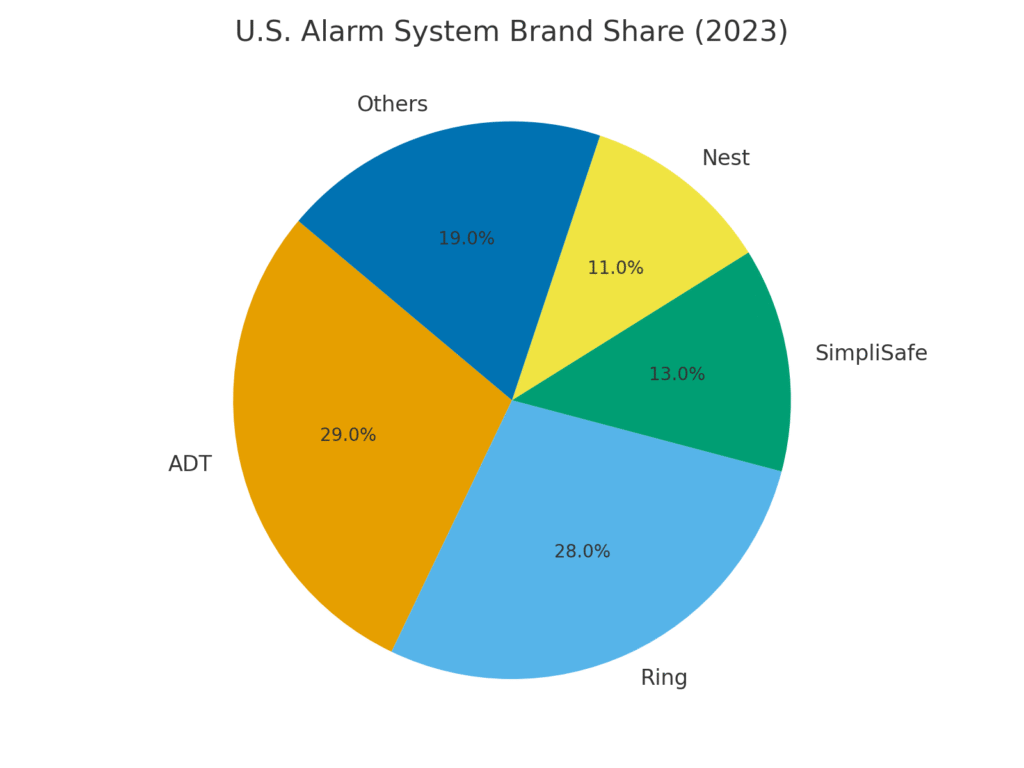
Market Share | ADT and Ring dominate with 29% and 28% respectively of alarm system households |
11 |
Investment Costs | Average investment: $400 installation + $40/month monitoring |
12 |
Premium Spending | 25% of homeowners spent $1,000+ on security in the past 5 years |
13 |
Crime Concerns | 59% of homeowners spent $1,000+ due to property crime concerns |
14 |
Installation Preference | 61% prefer professional installation, 67% choose wireless systems |
15 |
System Types | 44% prefer professionally installed, 42% use hard-wired systems |
16 |
Purchase Intent | 51% considering purchasing a home security product in the coming year |
17 |
Future Demand | 14M Americans considering alarm systems, 32M interested in doorbell cameras |
18 |
Primary Motivation | Having children at home is the most common reason for using alarm systems |
19 |
Family Factor | 81% with children are prompted to install home security measures |
20 |
Crime Deterrent | 83% of burglars check for alarms first, 60% seek alternative targets when alarms are present |
Top 20 Alarm System Marketing Statistics 2025
Alarm System Marketing Statistics #1: Global Home Security Systems Market Value (2025) ~ USD 72.4 Billion
The global home security systems market is projected to hit USD 72.4 billion in 2025, reflecting growing consumer demand for smarter protection. With increasing urbanization and rising concerns about theft, more households are turning to alarm systems and connected security devices. This expansion is being fueled by advancements in wireless technology and affordable smart home integrations. For marketers, the large market value highlights a sector that is becoming mainstream rather than niche. Businesses that can position themselves as trusted providers stand to benefit from this multi-billion-dollar opportunity.
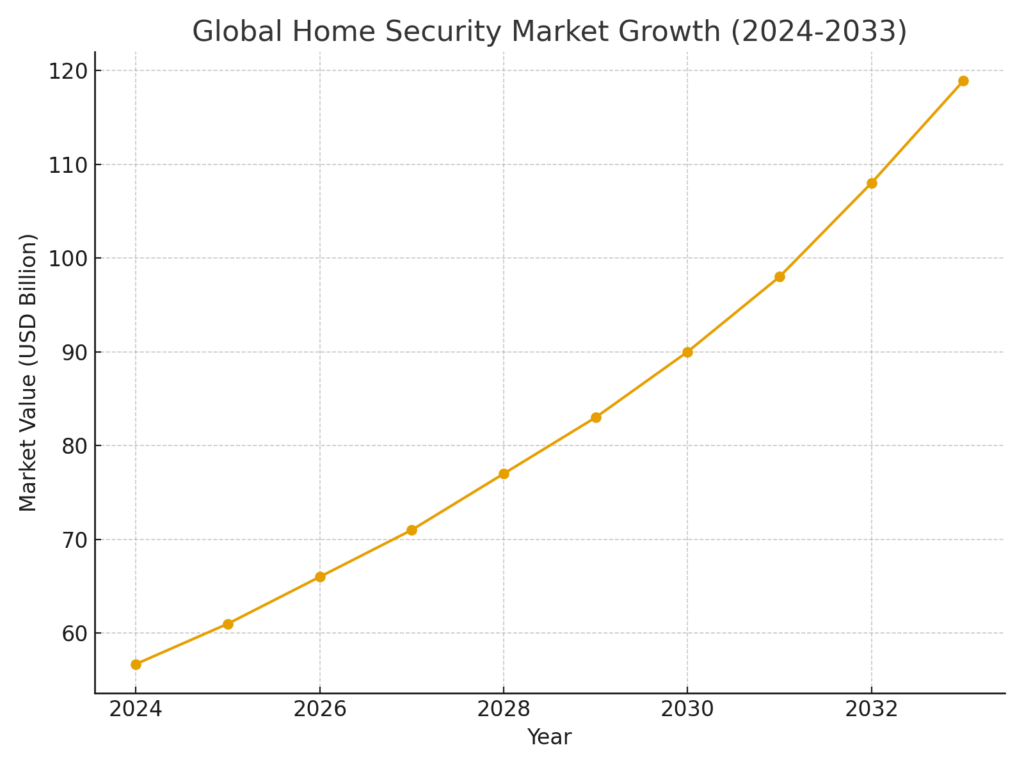
Alarm System Marketing Statistics #2: Market Growth To USD 118.9 Billion By 2033
The home security system market, valued at USD 56.7 billion in 2024, is set to grow to USD 118.9 billion by 2033. This nearly doubled value over less than a decade shows the consistent and reliable trajectory of the industry. Marketers can leverage this projected growth by aligning campaigns with consumer trust in long-term investments. As disposable incomes rise, more customers are willing to adopt comprehensive alarm and monitoring systems. The trend emphasizes the importance of scalable and future-ready marketing strategies.
Alarm System Marketing Statistics #3: Alarm Security System Market Valued At USD 8.45 Billion In 2022
The alarm security system market specifically was valued at USD 8.45 billion in 2022. Projections indicate it could grow to USD 14.34 billion by 2029, marking a strong CAGR of 7.85%. This growth is driven by the adoption of burglar alarms, fire alarms, and integrated security technologies. For marketers, the statistic highlights the importance of promoting specialized alarm features rather than just broad security. Tailored messaging around protection, reliability, and innovation resonates well with targeted audiences.
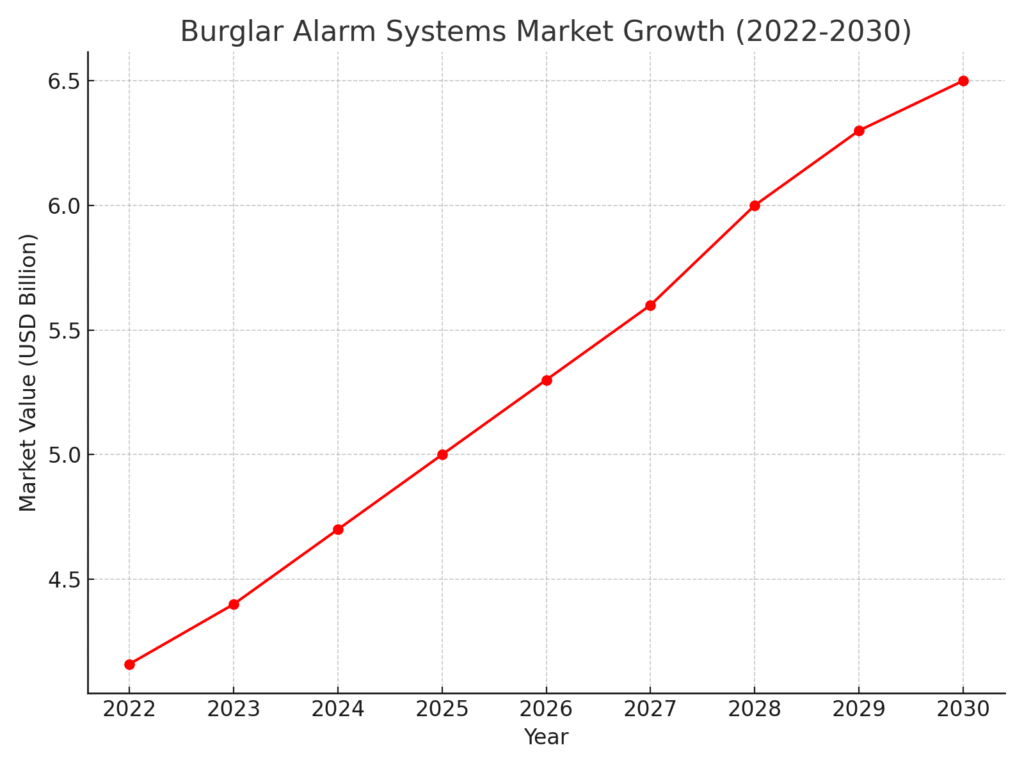
Alarm System Marketing Statistics #4: Burglar Alarm Systems Market At USD 4.16 Billion In 2022
The burglar alarm systems market stood at USD 4.16 billion in 2022. Forecasts predict expansion to USD 6.72 billion by 2030, a CAGR of 6.3%. Burglar alarms remain a cornerstone of the industry, appealing to homeowners seeking simple but effective solutions. Marketing campaigns that highlight reliability and affordability tend to perform well in this segment. It’s a reminder that traditional alarm systems still hold strong relevance despite the rise of smart devices.
Alarm System Marketing Statistics #5: Burglar Alarm Market To Reach USD 14.6 Billion By 2035
By 2035, the burglar alarm market is expected to nearly double, reaching USD 14.6 billion. The CAGR of 7.2% between 2025 and 2035 reflects strong, long-term growth potential. This stability allows marketers to plan campaigns with confidence, knowing the market will sustain demand. Investments in product innovation, particularly wireless solutions, will further fuel adoption. Marketing strategies that showcase longevity and adaptability will stand out in such a durable market.
.
Alarm System Marketing Statistics #6: 36 Million Active Monitored Alarm Systems In North America
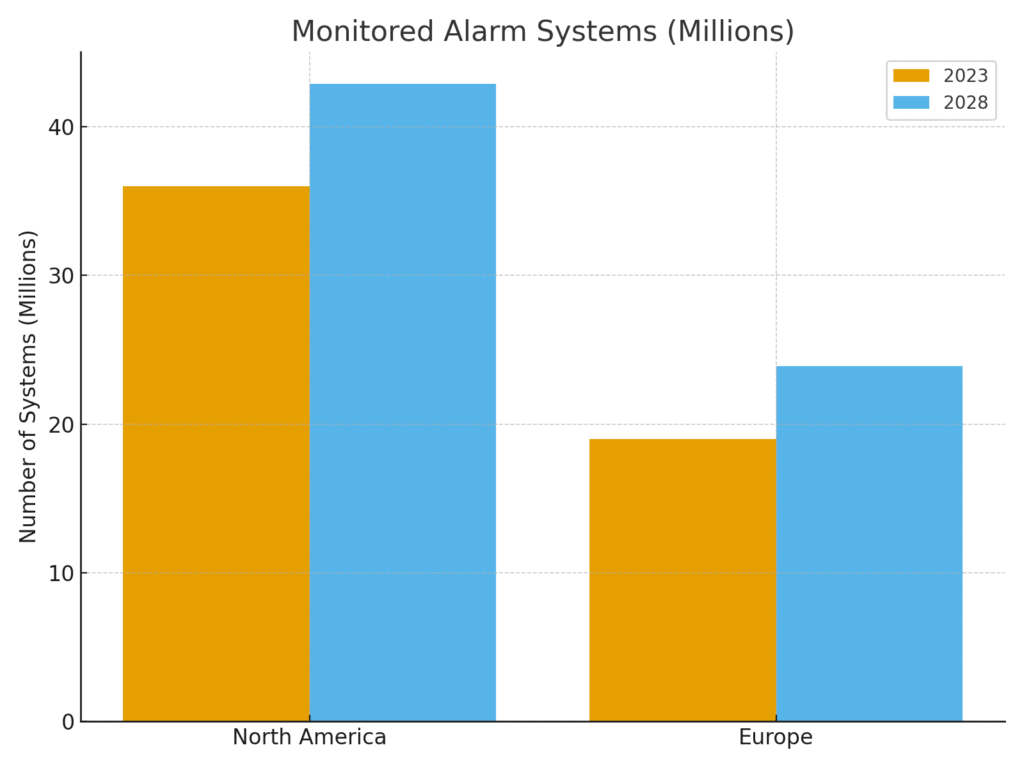
In 2023, North America recorded 36 million active monitored alarm systems. This penetration represents about 23.2% of households and small businesses in the region. The figure illustrates a high degree of awareness and adoption compared to other global markets. For marketers, it points to the effectiveness of campaigns that stress professional monitoring and reliability. Continued promotion of peace of mind and convenience will sustain this adoption rate.
Alarm System Marketing Statistics #7: 19 Million Active Monitored Alarm Systems In Europe
Europe had 19 million monitored alarm systems by the end of 2023. Despite the large number, penetration rates were only 7.6% across households and small businesses. This lower uptake suggests a massive opportunity for growth in European markets. Marketing strategies here should focus on raising awareness and emphasizing affordability. By educating customers about the benefits of monitored systems, companies can capture a significant untapped audience.
Alarm System Marketing Statistics #8: Europe Monitored Alarm Systems To Reach 23.9 Million By 2028
The European market is projected to expand from 19 million monitored alarms in 2023 to 23.9 million by 2028. This CAGR of 4.7% demonstrates steady, ongoing growth. While slower than North America, it signals a market maturing and gradually embracing security systems. Marketing efforts in Europe should highlight reliability and convenience to accelerate adoption. Positioning alarms as part of the modern smart home will resonate strongly with European consumers.
Alarm System Marketing Statistics #9: North America To Reach 42.9 Million Monitored Alarms By 2028
North America’s market is expected to grow from 36 million monitored alarms in 2023 to 42.9 million by 2028. This consistent rise emphasizes the long-term trust consumers place in security services. Marketers should emphasize themes like family safety, ease of monitoring, and professional reliability. Highlighting integration with smart home ecosystems will strengthen appeal. The U.S. and Canada remain central hubs for alarm system marketing innovation.
Alarm System Marketing Statistics #10: Wireless Systems To Dominate With 55.4% Share
Wireless burglar alarm systems are projected to hold 55.4% of the market by 2025. The flexibility and affordability of wireless systems make them a preferred choice among consumers. Marketing campaigns should highlight easy installation and the absence of complex wiring. These benefits align well with younger homeowners and renters seeking convenience. The dominance of wireless systems reflects how lifestyle needs drive technology adoption.
Alarm System Marketing Statistics #11: Hardware Accounts For 49.7% Of Revenues
In burglar alarm systems, hardware components such as sensors and panels make up nearly half of total revenues. This suggests that tangible, reliable devices are still key to customer trust. Marketers should emphasize the durability and innovation of these physical products. Pairing hardware promotions with value-added services creates a strong marketing mix. Highlighting real-world benefits of devices makes campaigns more relatable and convincing.
Alarm System Marketing Statistics #12: North America Holds 40% Market Share In 2022
North America accounted for 40% of the global burglar alarm market in 2022. This dominance reflects the region’s early adoption and high security awareness. Marketing here benefits from brand trust and recognition, as consumers are already engaged. However, competition is fierce, requiring marketers to differentiate with service quality. The statistic highlights both opportunity and the challenge of standing out in a crowded market.
Alarm System Marketing Statistics #13: U.S. Motivations For Adoption Include Children, Travel, And Valuables
In the U.S., common motivations for adopting alarms include having children (33%), frequent travel (31%), and valuable possessions (26%). This indicates that personal lifestyle factors strongly influence purchasing decisions. Marketers should tailor campaigns to speak directly to these emotional motivators. Messaging that emphasizes safety for families and protection during absences is especially effective. Lifestyle-based marketing often resonates more deeply than generic safety appeals.
Alarm System Marketing Statistics #14: Brand Share In U.S. – ADT At 29% And Ring At 28%
Within the U.S., ADT holds 29% of the market while Ring follows closely with 28%. Other brands like SimpliSafe and Nest trail behind but remain competitive. These close percentages show a highly competitive market dominated by strong players. For marketers, the lesson is that brand recognition and trust significantly influence adoption. New brands must focus on differentiation and customer experience to carve out market share.
Alarm System Marketing Statistics #15: 52% Of U.S. Homes Have Security Cameras
More than half of U.S. households now own at least one security camera. This statistic highlights the growing demand for visual surveillance alongside traditional alarms. Marketing campaigns should emphasize integration between alarms and cameras for complete protection. Consumers increasingly expect bundled or connected solutions that provide full visibility. The overlap between alarm systems and camera adoption creates cross-selling opportunities.
Alarm System Marketing Statistics #16: Renters Increasingly Adopt Alarm Systems
Renters are increasingly adopting alarm systems and security devices, narrowing the gap with homeowners. While homeowners remain the larger customer base, this shift is meaningful for marketers. Renters are motivated by affordability, portability, and flexibility. Messaging that highlights wireless, no-contract, and easy-to-move solutions resonates strongly with this group. The renter segment represents an under-served but growing market.
Alarm System Marketing Statistics #17: Global Home Security Market CAGR Of 8.6%
Between 2025 and 2030, the global home security market is projected to grow at a CAGR of 8.6%. This steady growth reflects increasing crime rates, smart home integration, and consumer trust in alarm technologies. Marketers can confidently invest in long-term campaigns knowing the industry has a stable trajectory. Highlighting innovation and security reliability are effective themes. For companies, this CAGR represents both resilience and opportunity.
Alarm System Marketing Statistics #18: Burglar Alarm CAGR Of 6.3% From 2023 To 2030
The burglar alarm market is set to grow at a CAGR of 6.3% between 2023 and 2030. Though slightly lower than overall home security growth, it remains significant. Marketers should focus on positioning burglar alarms as cost-effective and reliable. This ensures customers see them as an accessible entry point into home security. Consistent messaging around trustworthiness and simplicity resonates well in this segment.
Alarm System Marketing Statistics #19: Burglar Alarm Market To Double In 10 Years
Projections show the burglar alarm market doubling from USD 7.3 billion in 2025 to USD 14.6 billion by 2035. This doubling period highlights both demand and stability in the industry. Marketers can use this statistic to reinforce confidence in long-term adoption. Emphasizing innovation, such as app connectivity, will keep products attractive. Longevity in the market signals reliability to both investors and consumers.
Alarm System Marketing Statistics #20: Europe’s Low Residential Penetration At 6.3% Signals Growth
In Europe, residential penetration of monitored alarm systems is only 6.3%. This low figure highlights a massive untapped market. For marketers, it underscores the importance of awareness campaigns that educate consumers. By addressing cost concerns and promoting convenience, businesses can drive adoption. The statistic shows that Europe may be the next major growth frontier for alarm systems.
Why These Insights Matter for You
Looking back at these alarm system marketing statistics, I see more than just numbers—I see opportunities. From understanding where customer demand is headed to recognizing gaps that your business can fill, each stat highlights a path forward. My goal in sharing this with you isn’t just to inform, but to give you a sense of clarity and confidence about how to approach your own marketing. If you’re in the alarm or security space, these insights could help you sharpen your messaging, refine your targeting, and ultimately reach more people who need protection. For me, it’s always personal—helping others feel secure in both their homes and their business strategies is what makes the work meaningful.
SOURCES