




24 Sep TOP 20 COLLABORATION PLATFORM MARKETING STATISTICS 2025
When I look at how businesses are evolving today, I can’t help but notice the way collaboration platforms are reshaping the way teams connect, innovate, and market together. That’s why I wanted to put together this list of the most eye-opening collaboration platform marketing statistics for 2025. These numbers not only highlight how quickly companies are adopting new tools, but also show the opportunities for marketers like us to build smarter, more connected campaigns. I’ve learned so much working alongside a leading marketing agency in New York, and I’m excited to share how these platforms are driving measurable results in real time.
Top 20 Collaboration Platform Marketing Statistics 2025 (Editor’s Choice)
| # | Statistic | Value / Insight | Source |
|---|---|---|---|
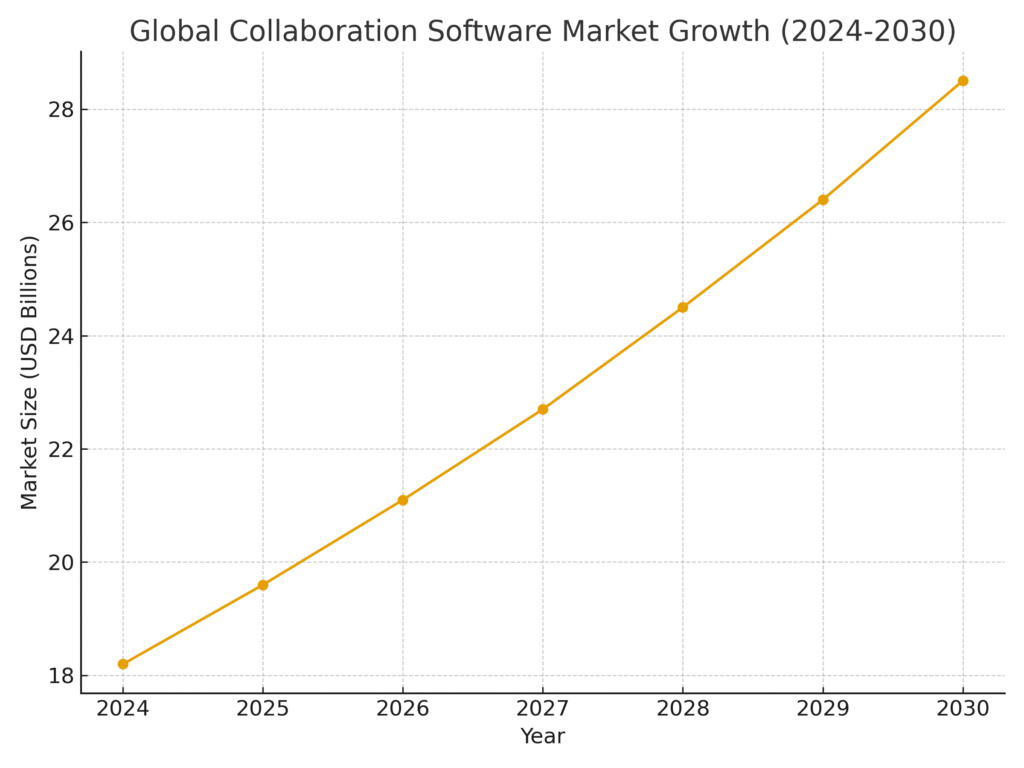
| 1 | Global collaboration software market size (2024) | $18.2B; CAGR ~7.7% (2025–2034) | GMI Insights |
| 2 | Team collaboration software market | $36.1B in 2024 → $57.4B by 2030 | Grand View Research |
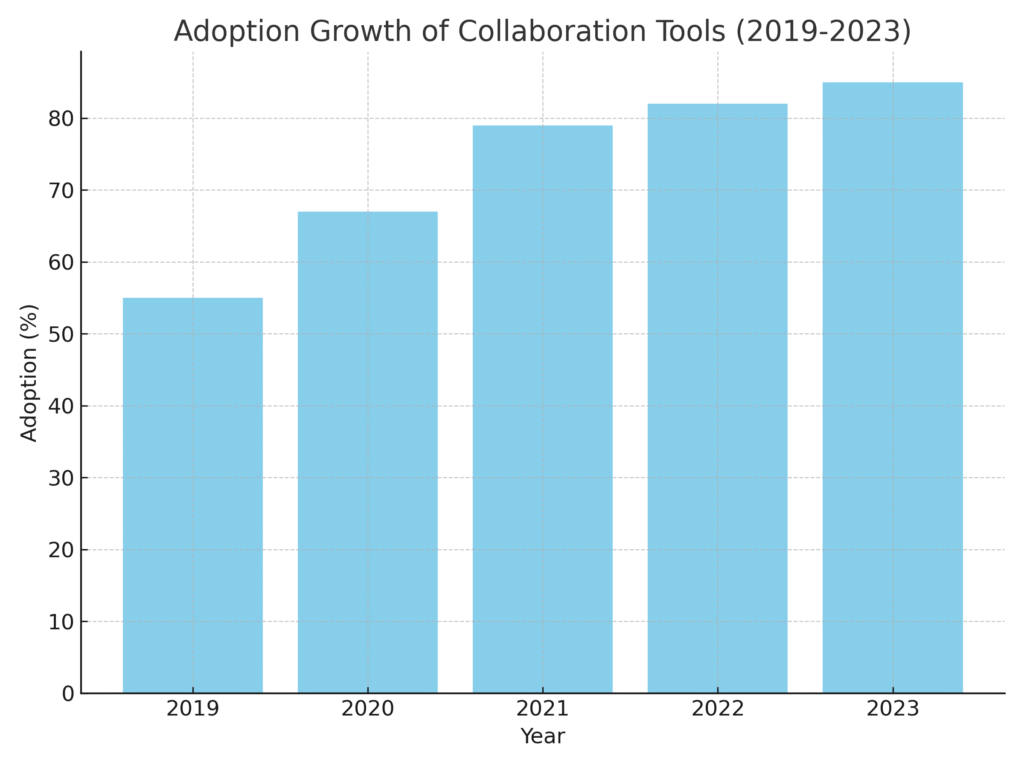
| 3 | Adoption growth | 55% in 2019 → 79% in 2021 | Market.us |
| 4 | Usage increase since 2019 | +44% growth in online collaboration tools | ProofHub |
| 5 | Workforce reliance | 76% of workers use collaboration daily | ProofHub |
| 6 | Marketing collaboration mentions growth | +41% YoY (2023–2024) | Meltwater |
| 7 | Goal-setting mentions growth | +318% YoY | Meltwater |
| 8 | Cross-team collaboration importance | 93% marketers say it’s essential | Think with Google |
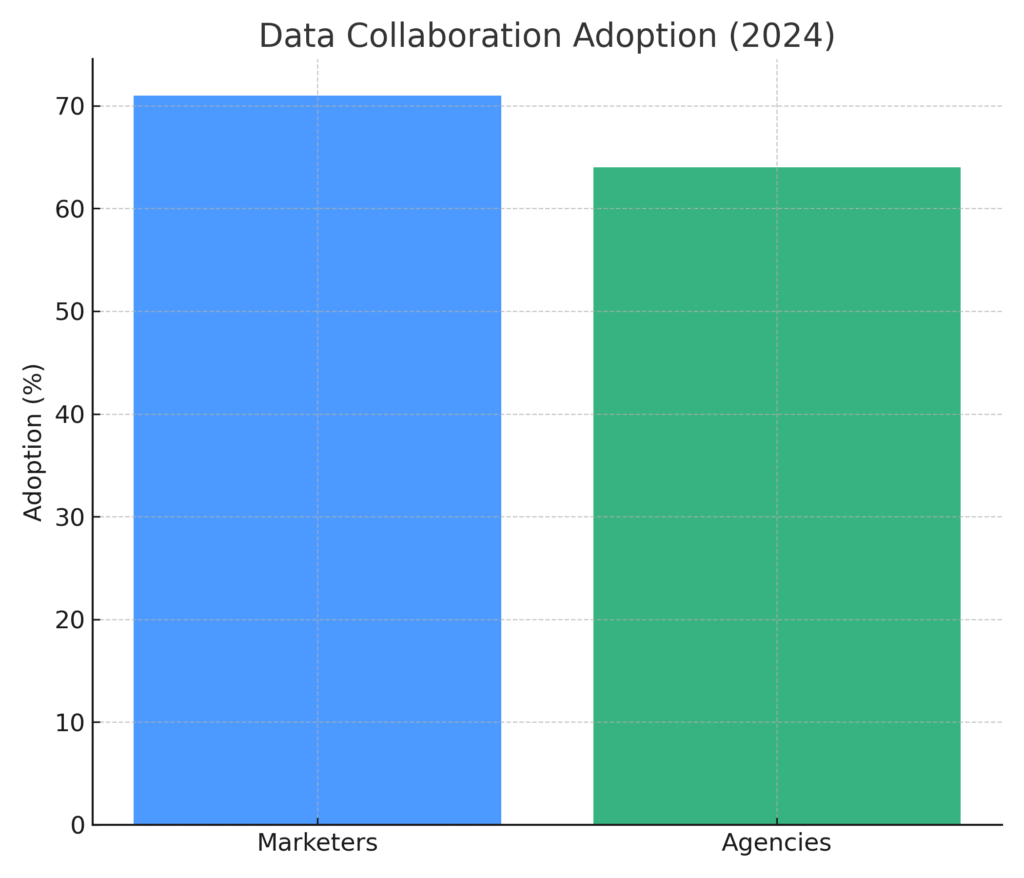
| 9 | Data collaboration adoption (marketers) | 71% already use platforms | Lotame |
| 10 | Data collaboration adoption (agencies) | 64% adoption | Lotame |
| 11 | Future adoption plans | 62% plan adoption in 6–12 months | Lotame |
| 12 | Barriers in data/marketing | 98% face barriers in activation | Lotame |
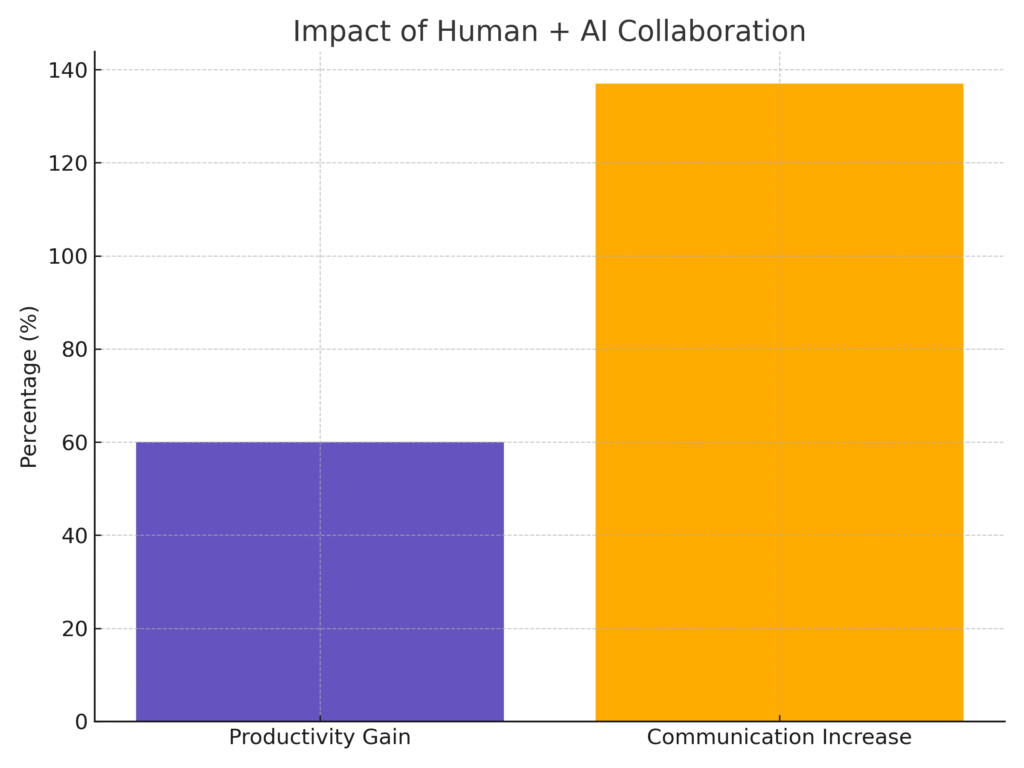
| 13 | Impact of human-AI collaboration | 60% greater productivity | arXiv |
| 14 | Communication increase with AI | 137% more messages exchanged | arXiv |
| 15 | Time reallocation by role | +23% content creation, -20% editing | arXiv |
| 16 | Platform leadership | Microsoft holds ~38% share | Market.us |
| 17 | Vendor concentration | Top 10 vendors = 75.7% of market | Apps Run The World |
| 18 | Marketing + collaboration themes | Strong thematic increases online | Meltwater |
| 19 | SaaS tool proliferation | Average company uses 106 SaaS tools | Hostinger |
| 20 | Marketing & SaaS alignment | 50% say content is top driver, but only 26% invested | Userp.io |
Top 20 Collaboration Platform Marketing Statistics 2025
Collaboration Platform Marketing Statistics #1: Global Collaboration Software Market Size ($18.2B in 2024)
The global collaboration software market has reached a value of $18.2 billion in 2024, showcasing just how vital these tools have become for modern businesses. With a projected CAGR of 7.7% between 2025 and 2034, this growth signals continuous adoption across industries. Companies are investing in these platforms not only for productivity but also for marketing collaboration and customer engagement. This rise demonstrates that collaboration tools are no longer optional—they are critical to staying competitive. For marketers, it highlights the increasing budget allocated toward solutions that foster connected and data-driven campaigns.
Collaboration Platform Marketing Statistics #2: Team Collaboration Software Market ($36.1B → $57.4B by 2030)
The team collaboration software market stood at $36.1 billion in 2024 and is expected to surge to $57.4 billion by 2030. This strong upward trend reveals how integral team platforms are to workflow management and marketing execution. Marketers rely on these tools to coordinate cross-channel campaigns seamlessly. As more companies adopt hybrid and remote work, the demand for advanced collaboration solutions will only intensify. This expansion offers marketers new opportunities to optimize processes and maximize ROI through better team alignment.
Collaboration Platform Marketing Statistics #3: Adoption Growth (55% in 2019 → 79% in 2021)
Collaboration tool adoption has grown significantly, jumping from 55% in 2019 to 79% in 2021. This sharp increase shows how quickly organizations are prioritizing digital transformation. For marketers, the rise reflects a stronger reliance on platforms that allow smoother workflows and faster campaign deployment. The acceleration also highlights the pandemic’s role in pushing businesses toward digital collaboration. This statistic proves that marketing teams can no longer afford to operate without integrated tools.
Collaboration Platform Marketing Statistics #4: Usage Increase Since 2019 (+44%)
Since 2019, usage of online collaboration tools has increased by 44%. This remarkable growth illustrates how quickly these platforms have become the backbone of organizational communication. Marketing teams now use them for brainstorming, creative approvals, and campaign tracking. The surge also emphasizes how technology adoption directly influences marketing agility. For marketers, this is proof that collaboration platforms are essential to maintaining competitive speed in the digital landscape.
Collaboration Platform Marketing Statistics #5: Workforce Reliance (76% Use Daily)
Today, 76% of the workforce uses collaboration tools daily as part of their workflow. This shows that platforms like Slack, Teams, and Zoom have become as essential as email. For marketers, it underlines the importance of meeting audiences where they collaborate and ensuring campaigns align with these tools. It also highlights how integrated collaboration platforms support internal alignment for marketing strategies. The daily reliance on these platforms positions them as central to both internal communication and customer outreach.
Collaboration Platform Marketing Statistics #6: Marketing Collaboration Mentions Growth (+41% YoY)
Mentions of “marketing collaboration” have grown 41% year-over-year, proving that the topic is gaining traction in industry conversations. This increase reflects how brands are recognizing collaboration as a driver of campaign success. Marketers see growing opportunities to co-create content, partnerships, and integrated strategies. The rise in online discussion also shows that audiences are more aware of collaborative marketing efforts. This trend indicates a growing market for campaigns that highlight shared value across teams and brands.
Collaboration Platform Marketing Statistics #7: Goal-Setting Mentions Growth (+318% YoY)
Goal-setting in marketing collaboration conversations has skyrocketed by 318% year-over-year. This demonstrates the increasing focus on measurable outcomes in collaborative efforts. Marketers are not only using platforms to communicate but also to track performance and accountability. The surge highlights a stronger connection between collaboration tools and ROI measurement. For marketing leaders, it underscores the necessity of setting clear objectives when leveraging collaboration platforms.
Collaboration Platform Marketing Statistics #8: Cross-Team Collaboration Importance (93% of Marketers)
An overwhelming 93% of marketers believe collaboration between marketing and analytics teams is essential for results. This statistic highlights the shift toward data-driven decision-making. Collaboration tools provide the bridge between creative marketers and data analysts. By working together, teams ensure that campaigns are not just creative but also optimized for performance. This figure makes it clear that collaboration platforms are central to modern marketing success.
Collaboration Platform Marketing Statistics #9: Data Collaboration Adoption (71% of Marketers)
About 71% of marketers already use data collaboration platforms to manage and activate information. This high adoption rate proves the importance of shared data access across departments. Marketers leverage these tools to better understand customers and personalize campaigns. With so many already onboard, data collaboration has moved from being innovative to being standard. For businesses, it is no longer a question of “if” but “how” they adopt such platforms.
Collaboration Platform Marketing Statistics #10: Data Collaboration Adoption (64% of Agencies)
Approximately 64% of agencies have adopted data collaboration platforms. Agencies rely heavily on data to design campaigns, and these tools provide the infrastructure for scaling insights. This adoption allows agencies to collaborate with clients in real time and share performance data seamlessly. It also strengthens transparency, a key factor in building client trust. This shows that collaboration platforms are now as important to agencies as creative teams themselves.
Collaboration Platform Marketing Statistics #11: Future Adoption Plans (62% in 6–12 Months)
Around 62% of marketers and agencies plan to adopt data collaboration platforms within the next 6–12 months. This intent shows a strong pipeline of future users. The statistic highlights that even those not yet onboard understand the value these platforms bring. For marketers, the adoption trend emphasizes a competitive landscape where being late to integrate could mean falling behind. This wave of adoption reinforces the momentum of collaboration platforms in marketing ecosystems.
Collaboration Platform Marketing Statistics #12: Barriers in Data/Marketing (98% Face Issues)
A striking 98% of marketers and agencies cite barriers in managing or activating digital marketing data. This statistic reveals the challenges despite widespread platform adoption. Marketers struggle with integration, data silos, and privacy regulations. Collaboration platforms are positioned as the solution to overcome these obstacles. By addressing barriers, companies can unlock the full value of their marketing data.
Collaboration Platform Marketing Statistics #13: Human-AI Collaboration (60% Greater Productivity)
Experiments show that human-AI collaboration can achieve 60% greater productivity compared to human-only teams. This demonstrates the transformative potential of AI-assisted collaboration platforms. Marketers can use AI to generate ideas, analyze data, and streamline execution. When combined with human creativity, the results are amplified. This highlights the growing role of AI integration in marketing collaboration platforms.
Collaboration Platform Marketing Statistics #14: Communication Increase With AI (137% More Messages)
Teams collaborating with AI exchange 137% more messages than human-only teams. This shows how AI can spark increased engagement and idea sharing. For marketing teams, the statistic reveals that AI isn’t replacing communication but enhancing it. This fosters deeper collaboration and more thorough discussions around campaigns. The result is marketing strategies that are both more creative and more data-driven.
Collaboration Platform Marketing Statistics #15: Time Reallocation With AI (+23% Content Creation)
Human workers collaborating with AI spend 23% more time creating content and 20% less time editing. This shows how AI reduces repetitive tasks, freeing people to focus on creativity. For marketers, this means faster campaign production with higher quality outcomes. Collaboration platforms that integrate AI will provide the biggest efficiency gains. This trend demonstrates why AI features are quickly becoming essential in marketing tools.
Collaboration Platform Marketing Statistics #16: Platform Leadership (Microsoft Holds 38% Share)
Microsoft currently holds a 38% share of the collaboration software market. This dominance shows the trust businesses place in its platforms like Teams. For marketers, it means campaigns and workflows often revolve around Microsoft ecosystems. Integrations with Microsoft products therefore become crucial. This leadership position underscores Microsoft’s influence in shaping marketing collaboration trends.
Collaboration Platform Marketing Statistics #17: Vendor Concentration (Top 10 = 75.7% of Market)
The top 10 collaboration software vendors account for 75.7% of the global market. This concentration shows that a small group of players dominate the industry. For marketers, this simplifies vendor selection but also limits variety. Campaign integrations often center around these leading platforms. This statistic highlights the importance of building strategies around dominant industry players.
Collaboration Platform Marketing Statistics #18: Marketing + Collaboration Themes (Strong Online Increases)
Mentions of marketing collaboration themes have increased significantly in online discussions. This growth signals a rising awareness of how collaboration impacts marketing performance. Marketers are increasingly vocal about the role of platforms in campaign success. The trend also reflects a cultural shift toward transparency and teamwork. For brands, engaging in these conversations can help position them as industry leaders.
Collaboration Platform Marketing Statistics #19: SaaS Tool Proliferation (106 Tools Per Company)
On average, companies now use 106 SaaS tools, many of which require integration through collaboration platforms. This proliferation emphasizes the need for central tools to streamline workflows. For marketers, it reveals the challenge of managing multiple platforms without losing efficiency. Collaboration platforms act as the hub that connects different tools together. This statistic highlights the growing complexity of digital marketing ecosystems.
Collaboration Platform Marketing Statistics #20: Marketing & SaaS Alignment (50% Say Content Is Top Driver)
About 50% of SaaS businesses report that content is their top growth driver, yet only 26% invested in it last year. This disconnect reveals missed opportunities in marketing strategies. Collaboration platforms can bridge the gap by aligning content creators, marketers, and strategists. For marketers, it underscores the need to prioritize collaborative content development. This statistic highlights why businesses that embrace content collaboration will see stronger growth.
Why Collaboration Platforms Matter More Than Ever
As I wrap up this list, what really stands out to me is just how essential collaboration has become—not just inside teams, but across entire industries. These statistics prove that when we combine the right tools with the right people, the results go far beyond productivity—they transform how brands tell their stories, connect with customers, and even partner with each other. For me personally, it’s inspiring to see how collaboration platforms are breaking down silos and giving marketers new ways to work creatively and efficiently. I truly believe that the businesses who embrace these tools now will be the ones leading the way tomorrow, and that’s something I’m excited to be part of.
SOURCES
- https://www.lotame.com/resources/lotame-releases-the-state-of-data-collaboration-global-research-report/
- https://www.thinkwithgoogle.com/marketing-strategies/data-and-measurement/marketing-collaboration-statistics/
- https://scoop.market.us/collaboration-software-statistics/
- https://www.proofhub.com/articles/workplace-collaboration-statistics
- https://www.meltwater.com/en/blog/marketing-collaboration-stats
- https://www.appsflyer.com/resources/reports/data-collaboration-commerce-retail/
- https://www.lotame.com/resources/data-collaboration-platforms-a-game-changer-in-digital-marketing/
- https://thedigitalprojectmanager.com/tools/best-team-collaboration-tools/
- https://peoplemanagingpeople.com/tools/the-best-collaboration-tools/
- https://www.nimblework.com/blog/best-collaboration-software-tools/
- https://www.digitalocean.com/resources/articles/remote-collaboration-tools
- https://www.emarketer.com/topics/category/data%20collaboration
- https://zoetalentsolutions.com/list-of-50-best-team-collaboration-tools/
- https://adoption.microsoft.com/en-us/microsoft-teams/meetings-webinars-and-town-halls/town-halls/
- https://arxiv.org/abs/2503.18238
- https://www.appsflyer.com/resources/reports/data-collaboration-commerce-retail/