



20 Sep TOP 20 CRAFT PRODUCTS MARKETING STATISTICS 2025
Exploring the world of handmade and artisan goods is both inspiring and insightful, especially when backed by reliable data. These craft products marketing statistics provide a clear view of how consumer behavior, global growth, and digital channels are reshaping this thriving industry. Whether you are a small creator, a business scaling into new markets, or simply curious about the future of handmade goods, the numbers tell an exciting story. With insights gathered from trusted sources and real trends, this article aims to help you understand where the craft market is headed and how to position yourself for success. As the marketing agency in New York that many brands turn to for guidance, we know that blending creativity with data is the key to standing out in a fast-moving world.
Top 20 Craft Products Marketing Statistics 2025 (Editor’s Choice)
| # | Craft Products Marketing Statistics | Key Insight |
|---|---|---|
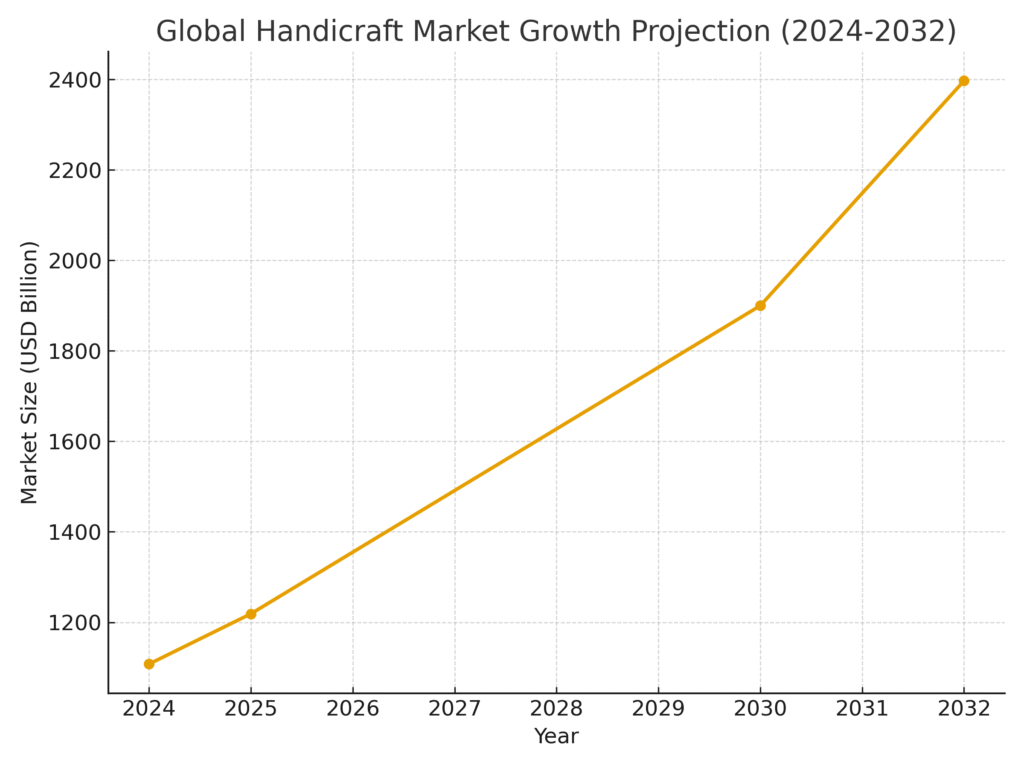
| 1 | Global handicraft market valued at $1.1 trillion in 2024, projected to hit $2.39 trillion by 2032. | Massive growth signals strong opportunities for scaling businesses worldwide. |
| 2 | Global handmade goods market expected to reach $1.94 trillion by 2033. | Artisan products continue to capture global consumer attention. |
| 3 | U.S. handmade goods market valued at $268 billion with ~9.8% growth rate. | Significant potential for local sellers targeting U.S. consumers. |
| 4 | Art & craft materials market valued at $22.5 billion in 2024, growing steadily. | High demand for craft supplies ensures consistent supplier opportunities. |
| 5 | Craft supplies market projected to reach $62.3 billion by 2034. | Steady long-term growth driven by DIY and personalization trends. |
| 6 | Arts & crafts global market forecasted to reach $62.6 billion by 2029. | Strong expansion in both traditional and online retail spaces. |
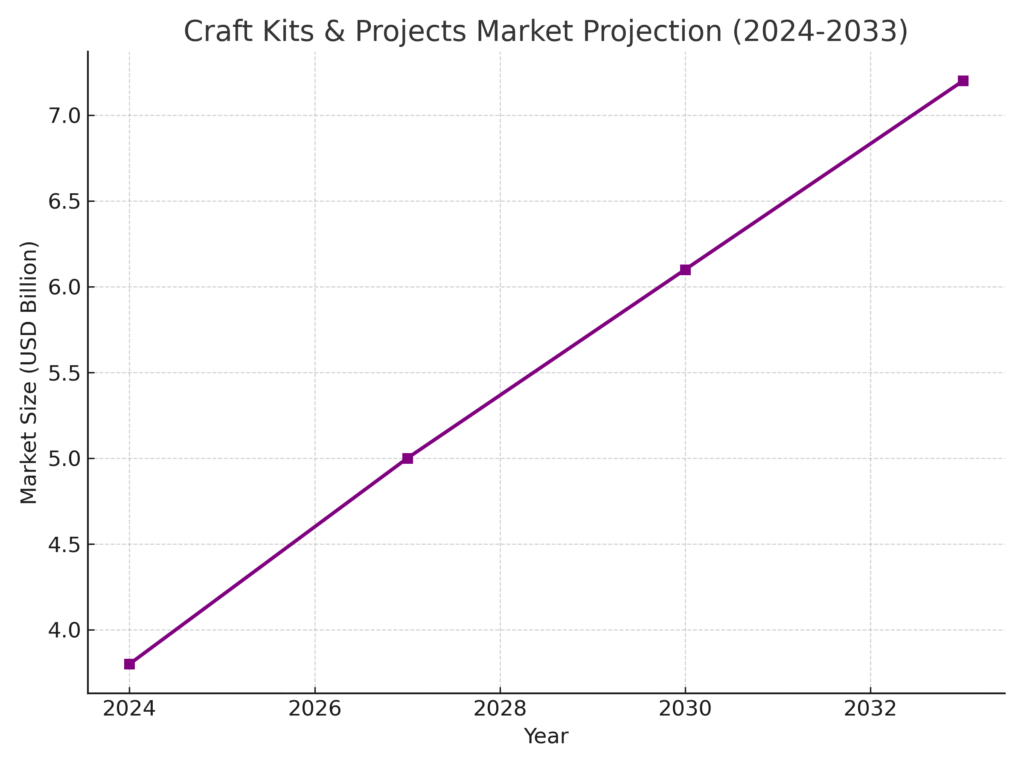
| 7 | Craft kits and projects market growing at ~7.4% CAGR. | Convenience-driven kits attract beginner and young audiences. |
| 8 | Handicrafts market projected at $983 billion by 2030. | Steady rise shows a resilient and sustainable industry sector. |
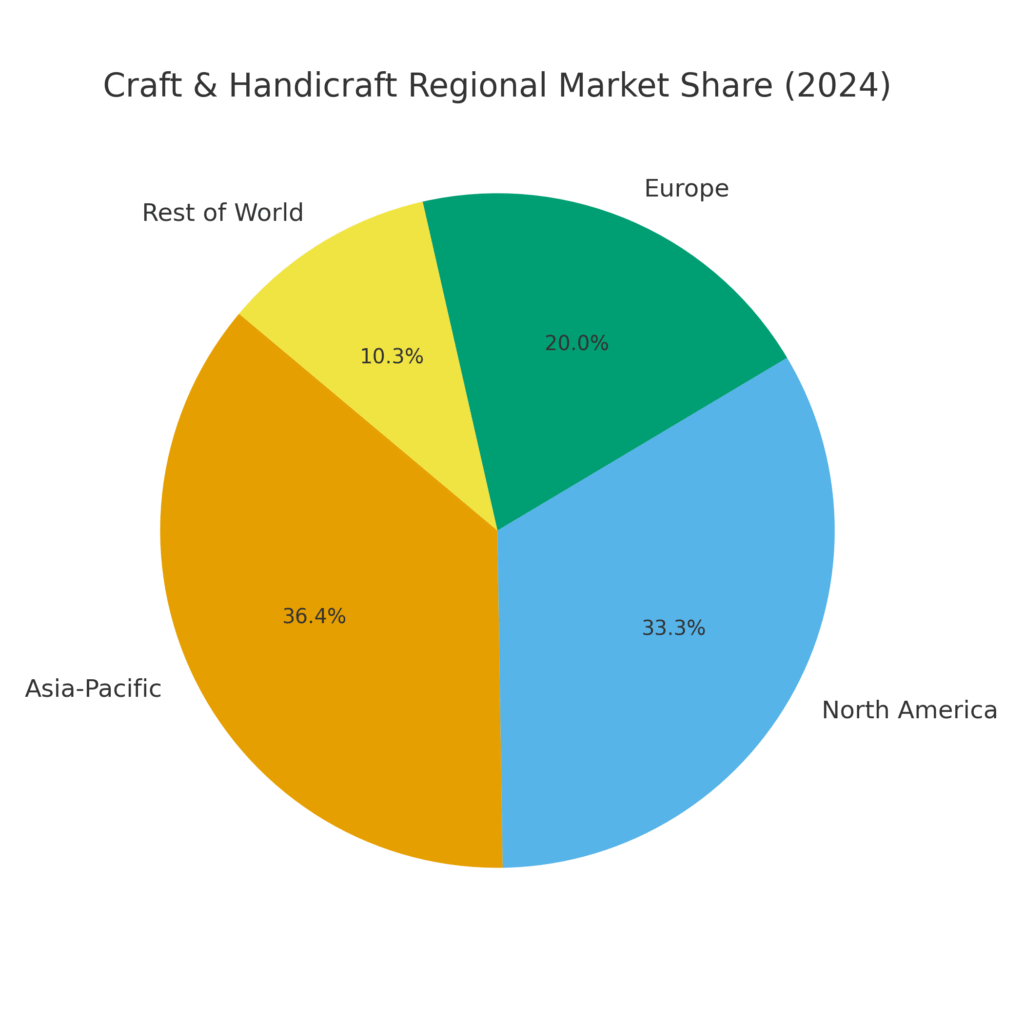
| 9 | Asia-Pacific holds 36% market share in handicrafts. | Dominance of production hubs and consumer interest in the region. |
| 10 | North America craft materials market holds 33% share. | High purchasing power supports continued growth in the region. |
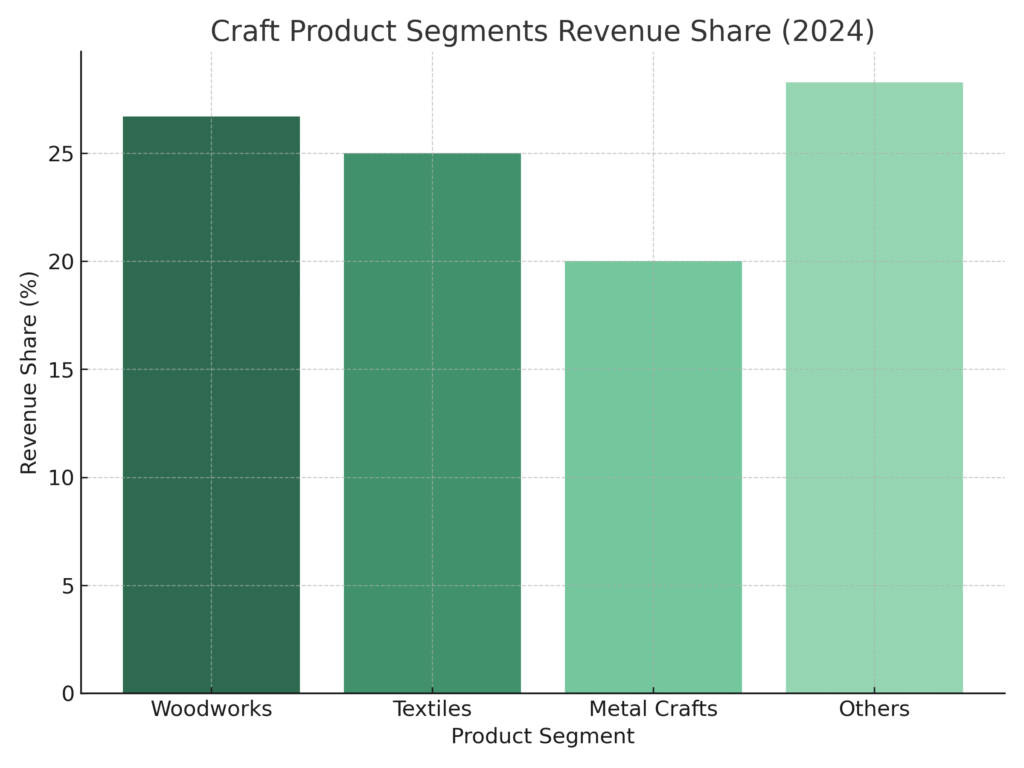
| 11 | Woodworks segment leads handicrafts with 26.7% share. | Wooden crafts remain highly popular in global markets. |
| 12 | Mass retailers dominate with 39% distribution share. | Scaling craft products requires tapping into large retail channels. |
| 13 | 72% of U.S. adults completed a craft project in the past year. | Crafting is mainstream, creating a vast customer base for supplies. |
| 14 | Online hobby & craft sales exceed $22.2 billion annually in the U.S. | E-commerce is essential for modern craft product marketing. |
| 15 | U.S. online hobby & craft supplies grew at only ~1.1% CAGR (2019-2024). | Indicates market maturity; innovation needed to spark growth. |
| 16 | DIY, personalization, and eco-friendly crafts drive demand. | Brands focusing on sustainability attract loyal consumers. |
| 17 | Workshops and tutorials gaining popularity globally. | Experiential marketing builds stronger customer relationships. |
| 18 | Eco-conscious buyers prefer recycled and upcycled materials. | Green marketing strategies stand out in crowded markets. |
| 19 | Craft fairs and local events rising as Amazon alternatives. | Offline presence strengthens authenticity and customer trust. |
| 20 | Gen Z & Millennials heavily influenced by social media tutorials. | Short-form video content is key for reaching younger crafters. |
Top 20 Craft Products Marketing Statistics 2025
Craft Products Marketing Statistics #1: Global Handicraft Market Valued At $1.1 Trillion In 2024
The global handicraft market reached a massive value of $1.1 trillion in 2024, showing its strong presence in the global economy. Projections indicate that this figure will almost double, hitting $2.39 trillion by 2032. This rapid growth reflects the increasing consumer demand for authenticity, creativity, and cultural connection in products. Businesses within the sector need to focus on scaling production without losing the artisanal essence. For marketers, this statistic proves that investing in craft products is a long-term, lucrative strategy.
Craft Products Marketing Statistics #2: Handmade Goods Market Expected To Reach $1.94 Trillion By 2033
The handmade goods sector is experiencing a surge in popularity, with predictions showing it will reach $1.94 trillion by 2033. This rapid expansion highlights consumer preference for unique and personalized items over mass-produced products. Brands tapping into this demand have a strong chance to position themselves as leaders in authenticity. Digital platforms like Etsy and Instagram play a key role in connecting artisans to global buyers. For marketers, the opportunity lies in showcasing craftsmanship while integrating storytelling into campaigns.
Craft Products Marketing Statistics #3: U.S. Handmade Goods Market Valued At $268 Billion
The U.S. handmade goods market alone is worth an impressive $268 billion. Growing at nearly 9.8% annually, it shows that American consumers are highly invested in artisan products. Small businesses and independent creators have significant potential if they leverage the right marketing strategies. This growth is fueled by a mix of online shopping and in-person craft fairs. For marketers, it emphasizes the need to target U.S. consumers through both digital ads and local community events.
Craft Products Marketing Statistics #4: Art & Craft Materials Market Valued At $22.5 Billion
In 2024, the global art and craft materials market was valued at $22.5 billion. This sector focuses on the supplies needed for craft making, including paints, yarns, and paper products. Its steady rise reflects the popularity of DIY culture and hobby crafting across all age groups. Suppliers and retailers can benefit greatly by offering eco-friendly and sustainable material options. Marketers should highlight quality and accessibility to capture consumer trust in this growing segment.
Craft Products Marketing Statistics #5: Craft Supplies Market To Reach $62.3 Billion By 2034
The craft supplies market is forecasted to hit $62.3 billion by 2034. This growth demonstrates that crafting is not just a passing hobby but a long-term lifestyle choice for many. Consumers are increasingly looking for innovative materials that inspire creativity. For marketers, this means emphasizing product variety and convenience in supply. Subscription models for recurring supply purchases could be a major trend to explore.
Craft Products Marketing Statistics #6: Arts & Crafts Market To Reach $62.6 Billion By 2029
The arts and crafts market is predicted to expand from $44.4 billion in 2024 to $62.6 billion by 2029. This statistic showcases consistent year-over-year growth. Increased consumer spending on hobbies, relaxation, and creative expression is driving this upward trend. Retailers who combine both offline stores and e-commerce platforms will thrive the most. For marketers, positioning arts and crafts as a lifestyle enhancer is a key strategy.
Craft Products Marketing Statistics #7: Craft Kits And Projects Growing At 7.4% CAGR
Craft kits and projects are rapidly gaining traction, growing at an annual rate of 7.4%. These kits simplify the crafting process by including all the necessary materials in one package. Younger generations and beginners are especially attracted to these convenient options. For marketers, promoting these kits as easy entry points into crafting can drive higher sales. Educational and creative positioning works particularly well for this audience.
Craft Products Marketing Statistics #8: Handicrafts Market Projected At $983 Billion By 2030
By 2030, the handicrafts market is expected to reach $983 billion. Despite global economic shifts, handicrafts continue to show resilience in demand. Consumers see these products as authentic, cultural, and unique alternatives to mass production. Businesses that focus on exporting handcrafted goods are poised for success. Marketing should emphasize both tradition and modern appeal to capture diverse audiences.
Craft Products Marketing Statistics #9: Asia-Pacific Holds 36% Market Share
The Asia-Pacific region dominates the handicrafts industry with a 36% market share. This leadership is due to both large-scale production and deep-rooted cultural traditions. Countries like India, China, and Indonesia are major exporters of handmade products. Marketers in this region have the chance to appeal to both local and global markets. Highlighting heritage and craftsmanship will resonate strongly with consumers.
Craft Products Marketing Statistics #10: North America Holds 33% Of Craft Materials Market
North America accounted for 33% of the global craft materials market in 2024. This reflects the region’s strong hobby culture and high disposable income. Consumers in North America are open to experimenting with new craft tools and supplies. Marketers can target this audience through digital advertising, craft tutorials, and influencer partnerships. The region remains a hotspot for craft innovation and consumer engagement.
Craft Products Marketing Statistics #11: Woodworks Segment Leads With 26.7% Share
Wooden crafts remain the most dominant product category, holding 26.7% of market revenue. Consumers value wooden products for their durability, functionality, and aesthetic appeal. This segment is popular across both traditional and modern décor markets. Marketers can highlight sustainability by showcasing eco-friendly wood sourcing. Positioning woodcrafts as timeless pieces can boost long-term consumer loyalty.
Craft Products Marketing Statistics #12: Mass Retailers Hold 39% Distribution Share
Mass retailers captured 39% of the distribution share in the handicrafts market. This shows that even artisan products are reaching large audiences through big retail chains. While niche stores remain important, large-scale retail provides visibility and scale. Marketers should consider partnerships with big-box stores to reach wider audiences. However, maintaining the uniqueness of products in such settings is crucial for success.
Craft Products Marketing Statistics #13: 72% Of U.S. Adults Completed A Craft In The Past Year
Nearly three-quarters of U.S. adults reported completing a craft project in the past year. This high participation rate highlights the mainstream appeal of crafting. From children to retirees, crafting spans all demographics. For marketers, this means tailoring products and campaigns to appeal across age groups. Crafting is both a hobby and a form of self-expression for millions of Americans.
Craft Products Marketing Statistics #14: Online Hobby & Craft Sales Exceed $22.2 Billion
Online hobby and craft sales surpassed $22.2 billion in the United States. This demonstrates the importance of e-commerce channels in the craft industry. Digital platforms allow artisans and small businesses to reach international customers. Marketers should focus on optimizing online visibility through SEO and social media. Building trust with buyers via reviews and quality assurance is also essential.
Craft Products Marketing Statistics #15: U.S. Online Hobby & Craft Supplies Grew At 1.1% CAGR
Between 2019 and 2024, U.S. online craft supply sales grew at a modest 1.1% CAGR. This suggests a mature market where growth is slower compared to other regions. Businesses may need to focus on innovation to stay competitive. Marketers can use personalization, loyalty programs, and unique product bundles to spark renewed interest. Differentiation is key in a saturated marketplace.
Craft Products Marketing Statistics #16: DIY, Personalization, And Eco-Friendly Crafts Drive Demand
Trends like DIY culture, personalization, and sustainability are fueling demand for craft products. Consumers want items that reflect their individuality while being eco-conscious. Marketers who align with these values will gain consumer trust and loyalty. Highlighting these themes in marketing campaigns creates stronger connections. Brands that ignore these trends risk falling behind competitors.
Craft Products Marketing Statistics #17: Workshops And Tutorials Gain Popularity
Workshops and craft tutorials are becoming a major driver of consumer interest. People are increasingly willing to pay for experiences that teach them new skills. Both online and in-person workshops are booming. For marketers, this opens opportunities to position products within educational and experiential contexts. Craft brands that offer workshops can also build stronger brand communities.
Craft Products Marketing Statistics #18: Eco-Conscious Buyers Prefer Recycled Materials
Eco-conscious consumers are now prioritizing recycled, reusable, and upcycled materials. This shift is reshaping how suppliers and brands design craft products. Marketing campaigns that highlight eco-friendly features resonate strongly with younger demographics. Sustainability has become a selling point, not just a nice-to-have. Companies that embrace this change will strengthen their long-term brand image.
Craft Products Marketing Statistics #19: Craft Fairs And Local Events Rising As Amazon Alternatives
Craft fairs and local events are gaining renewed importance as alternatives to mass e-commerce platforms. Consumers crave authentic and local shopping experiences. These fairs allow buyers to interact directly with artisans, which builds trust and connection. For marketers, investing in event presence can significantly improve brand awareness. Craft fairs also serve as great testing grounds for new products.
Craft Products Marketing Statistics #20: Gen Z & Millennials Influenced By Social Media Tutorials
Gen Z and Millennials are heavily influenced by short-form video content showcasing crafts. Platforms like TikTok, Instagram, and YouTube drive trends and “gateway crafts.” These demographics value accessibility and visual inspiration. For marketers, leveraging influencers and social media content is essential. Campaigns built around tutorials and challenges are especially effective with younger audiences.
Turning Numbers into Creative Opportunities
These craft products marketing statistics are more than just figures on a page—they’re a roadmap for artisans, retailers, and marketers to thrive in an industry rooted in creativity. From the explosive growth of global handicrafts to the rise of eco-friendly materials and DIY culture, the opportunities are endless for those ready to adapt and innovate. Every handmade item carries a story, and by aligning your marketing with these trends, you can make sure that story reaches the right audience. The future of crafts isn’t only about keeping traditions alive, but also about finding new ways to connect with communities who value authenticity, uniqueness, and artistry. Here’s to embracing the data while never losing sight of the heart behind every handmade piece.
SOURCES
- https://customcy.com/blog/craft-handmade-stats/ (Customcy)
- https://www.fortunebusinessinsights.com/handicraft-market-108435 (Fortune Business Insights)
- https://market.us/report/arts-and-crafts-market/ (Market.us)
- https://craftindustryalliance.org/craft-industry-reflections-on-2024-and-predictions-for-2025/ (Craft Industry Alliance)
- https://www.rainpos.com/blog/craft-industry-trends (rainpos.com)
- https://www.madeurban.com/blog/craft-trends-to-make-sell-in-2025/ (Made Urban)
- https://blog.yazati.com/the-growing-demand-for-handmade-craft-products-in-2025/ (https://blog.yazati.com/)
- https://www.researchandmarkets.com/report/north-america-handicraft-market?srsltid=AfmBOopJb8qCdN21wd_E2Y7O-PbhDdNL62R13UA-TJZRN5euCB4HTAMU (Research and Markets)
- https://www.greengeeks.com/blog/make-sell-online/ (GreenGeeks)
- https://bestcolorfulsocks.com/blogs/news/handmade-clothing-sales-statistics?srsltid=AfmBOooToB5Z7uhLvLt7QvLIkYnOfMXzOaR64OzkcmHAbhfp67E6XaO7 (best colorful socks)
- https://www.credenceresearch.com/report/handicrafts-market (Credence Research Inc.)
- https://www.stitchcraftmarketing.com/2024-2025-craft-trends-report-for-craft-marketers/ (Stitchcraft Marketing)
- https://blog.yazati.com/the-growing-demand-for-handmade-craft-products-in-2025/ (https://blog.yazati.com/)
- https://www.fortunebusinessinsights.com/handicraft-market-108435 (Fortune Business Insights) https://www.rainpos.com/blog/craft-industry-trends (rainpos.com)
- https://customcy.com/blog/craft-handmade-stats/ (Customcy)