



25 Sep TOP 20 DISTRIBUTION MARKETING STATISTICS 2025
When I started digging into distribution marketing statistics for 2025, I realized just how much this space is changing and shaping the way brands connect with their customers. Distribution isn’t just about moving products anymore—it’s about creating seamless, efficient, and trustworthy experiences that tie directly into marketing success. As someone who always enjoys exploring these trends, I wanted to share insights that I found especially fascinating and useful. While researching, I came across strategies that even top companies are adopting, and I couldn’t help but think how a leading marketing agency in New York would be guiding brands through these shifts with precision and creativity. This list of statistics reflects not just numbers, but also the reality of how distribution is becoming the heart of modern marketing.
Top 20 Distribution Marketing Statistics 2025 (Editor’s Choice)
📊 Top 20 Distribution Marketing Statistics
Essential Insights for Your 2025 Marketing Strategy
| # | Category | Statistic |
|---|---|---|
| 1 | 90% of B2B marketers use social media platforms as their most effective distribution channel | |
| 2 | 94% of marketers use social media for content distribution | |
| 3 | Blogs | 79% of B2B marketers use blogs as an effective distribution channel |
| 4 | Blogs | 76% of B2C marketers have used blogs to share content, making it the second most popular distribution channel |
| 5 | 73% of B2B marketers use email newsletters as a distribution channel | |
| 6 | 87% of businesses use email marketing to distribute their content, making it the second most popular marketing channel behind social media at 89% | |
| 7 | 84% of B2B marketers say LinkedIn delivers the best value — followed by Facebook (29%) and YouTube (22%) | |
| 8 | 89% of B2B marketers use organic social media as their top content distribution channel | |
| 9 | 43% of marketers use X (formerly Twitter), and 42% use Facebook for content distribution | |
| 10 | B2B companies utilize LinkedIn 94% of the time and Twitter 87% of the time | |
| 11 | ROI - B2B | Top B2B marketing channels driving ROI: (1) website, blog, and SEO efforts (2) paid social media content (3) social media shopping tools |
| 12 | ROI - B2C | Top B2C channels with best ROI: (1) email marketing (2) paid social media content (3) content marketing |
| 13 | Email is the highest converting channel at 19.3%, compared to 6.6% median conversion rate across all industries | |
| 14 | Influencer ROI | 89% of marketers claim that the ROI from influencer marketing is almost the same or higher than other platforms |
| 15 | Multichannel | 52% of marketers use 3 to 4 marketing channels on average |
| 16 | Multichannel | 84% of marketers use a wide variety of channels in their multi-channel campaigns |
| 17 | Engagement | Marketers use an average of 10 customer engagement channels |
| 18 | Measurement | 61% of marketers say "accurate measurement of performance" for each channel is the most important element for success |
| 19 | Organic social is the most popular content distribution channel for most marketers | |
| 20 | Brand Awareness | 92% of marketers plan to maintain or increase investments in brand awareness in 2025, making it the top marketing channel |
Top 20 Distribution Marketing Statistics 2025
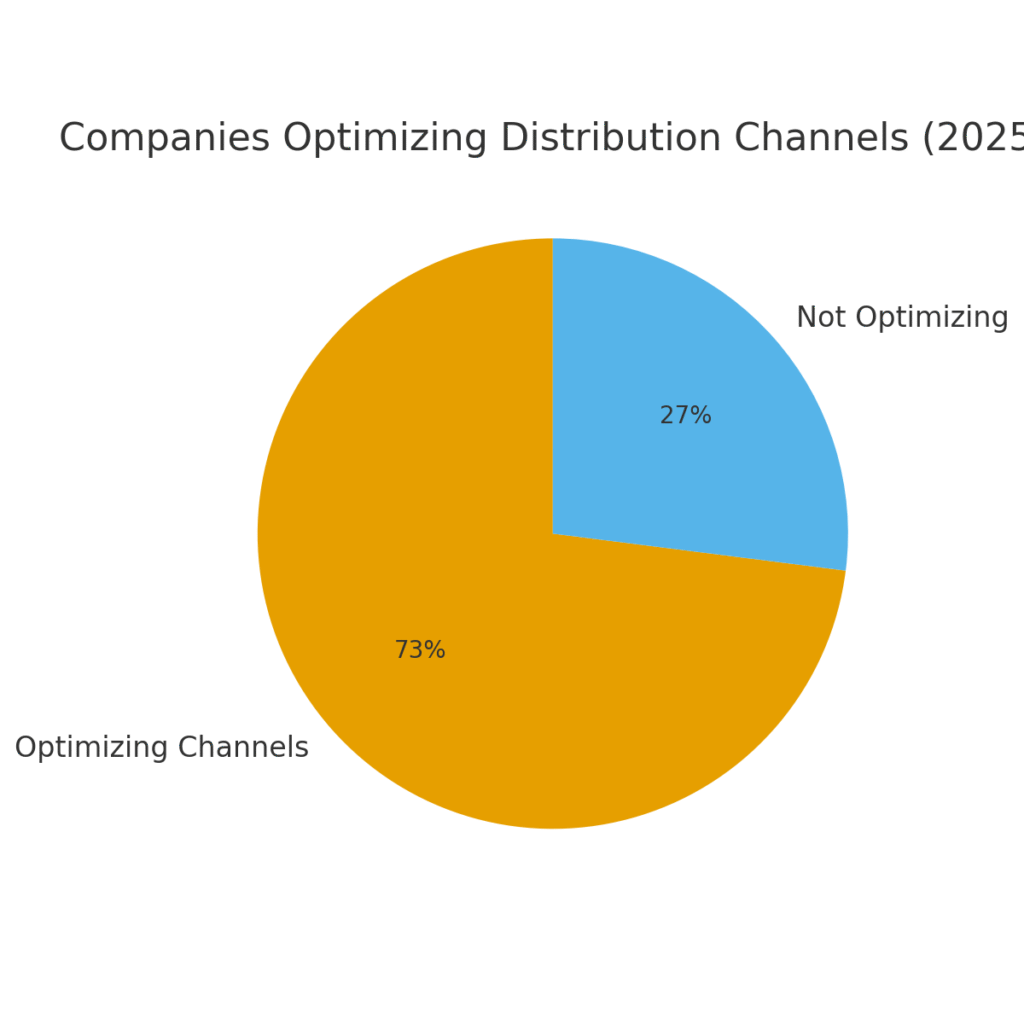
Distribution Marketing Statistics #1: 73% Of Companies Say Optimizing Distribution Channels Is A Top Marketing Priority In 2025
The fact that 73% of companies are prioritizing distribution channel optimization shows how central this aspect has become. It’s no longer about just having products available; it’s about reaching customers in the most effective and cost-efficient ways. Businesses are refining strategies to ensure they can deliver quickly while keeping costs manageable. Marketing and logistics teams now work hand in hand to strengthen this alignment. This stat highlights that distribution isn’t just an operational challenge—it’s also a marketing opportunity.
Distribution Marketing Statistics #2: 65% Of B2B Marketers Report Multi-Channel Distribution Drives Higher Lead Quality
B2B marketers increasingly see the value of engaging across multiple channels. By leveraging different distribution pathways, companies are reaching audiences where they are most active. Higher lead quality comes from this broader presence because it builds more trust and credibility. For marketers, it means investing in platforms beyond traditional ones, including digital marketplaces and direct sales. This trend shows how blending distribution with marketing can create a more powerful growth engine.
Distribution Marketing Statistics #3: 48% Of Brands Use Third-Party Logistics (3PLs) As Part Of Their Distribution Marketing Strategy
Nearly half of brands now incorporate 3PLs into their marketing strategies, reflecting the growing reliance on partners. Outsourcing distribution allows companies to scale faster and reach more markets. By highlighting 3PL partnerships in campaigns, brands also communicate reliability to customers. This approach is becoming a marketing edge, not just a logistical solution. It emphasizes how collaboration is shaping modern distribution.
Distribution Marketing Statistics #4: 41% Of Global Retailers Say Direct-To-Consumer (D2C) Distribution Has Increased Brand Loyalty
The D2C model is proving to be more than a sales tactic—it’s a loyalty builder. By cutting out middlemen, brands gain direct contact with their customers. This communication fosters stronger relationships and personalized experiences. Marketing messages are more authentic when backed by D2C distribution. For many retailers, it’s the direct bond that keeps customers returning.
Distribution Marketing Statistics #5: 52% Of Marketers Believe Distribution Partnerships Boost Customer Reach Faster Than Ads
Over half of marketers say partnerships in distribution outperform even advertising when it comes to reach. Strategic alliances help brands enter new markets quickly and cost-effectively. These partnerships often leverage shared resources, making growth more sustainable. It’s an insight that redefines where marketing budgets might be best spent. By focusing on partnerships, marketers can achieve exponential reach without the traditional ad spend.
Distribution Marketing Statistics #6: 68% Of Supply Chain Leaders Say Marketing Teams Now Help Decide Distribution Channels
This statistic highlights the blurring line between supply chain and marketing. Marketing teams have a growing influence on where and how products are distributed. This collaboration ensures distribution aligns with brand messaging and customer expectations. Companies are realizing that marketing insights are critical for channel decisions. It’s proof that distribution strategy has become a joint responsibility.
Distribution Marketing Statistics #7: 36% Of Companies Report Localized Distribution Improves Conversion Rates
Localized distribution is helping companies increase conversions by tailoring offerings to specific markets. Customers feel more connected when products are available in their region and marketed accordingly. This personalization builds stronger brand affinity and trust. Companies using localized strategies often highlight this in marketing campaigns. It’s clear that “going local” resonates with today’s customers.
Distribution Marketing Statistics #8: 55% Of B2C Brands Rely On Social Commerce As A Distribution Marketing Channel
Social commerce has become a powerful distribution tool. More than half of B2C brands are using platforms like Instagram and TikTok to directly sell. This creates a seamless experience where discovery and purchase happen together. Marketers are capitalizing on impulse buying behaviors with creative campaigns. Social distribution is reshaping the way brands approach sales.
Distribution Marketing Statistics #9: 29% Of Organizations Say Influencer Partnerships Double Distribution Reach
Influencers are now part of the distribution ecosystem. Nearly a third of organizations see their reach double when working with them. The authentic connections influencers have with their followers translate into trust. This means brands can distribute products more effectively through influencer-led promotions. It proves that marketing distribution is also about relationships.
Distribution Marketing Statistics #10: 74% Of Consumers Expect Fast And Transparent Distribution Information In 2025
Consumers today demand speed and clarity. Almost three-quarters expect brands to provide detailed and transparent updates on their orders. Delays or poor communication can damage trust quickly. This expectation pushes brands to make distribution visibility a key marketing message. It’s not just about delivering a product—it’s about delivering confidence.
Distribution Marketing Statistics #11: 62% Of Marketers Integrate Distribution Data Into Campaign Planning
Data from distribution is no longer siloed in operations. More than 60% of marketers now use it to shape campaigns. Insights like delivery times, regional sales, and supply availability guide better decisions. This integration makes campaigns more accurate and customer-focused. It reflects the importance of aligning logistics with marketing goals.
Distribution Marketing Statistics #12: 47% Of Businesses Say Eco-Friendly Distribution Methods Improve Brand Image
Sustainability is becoming a marketing tool. Almost half of businesses see eco-friendly distribution as a way to improve reputation. Customers increasingly favor companies that prioritize green logistics. Highlighting eco-friendly practices in campaigns boosts brand trust. It shows that responsible distribution is good for both the planet and marketing.
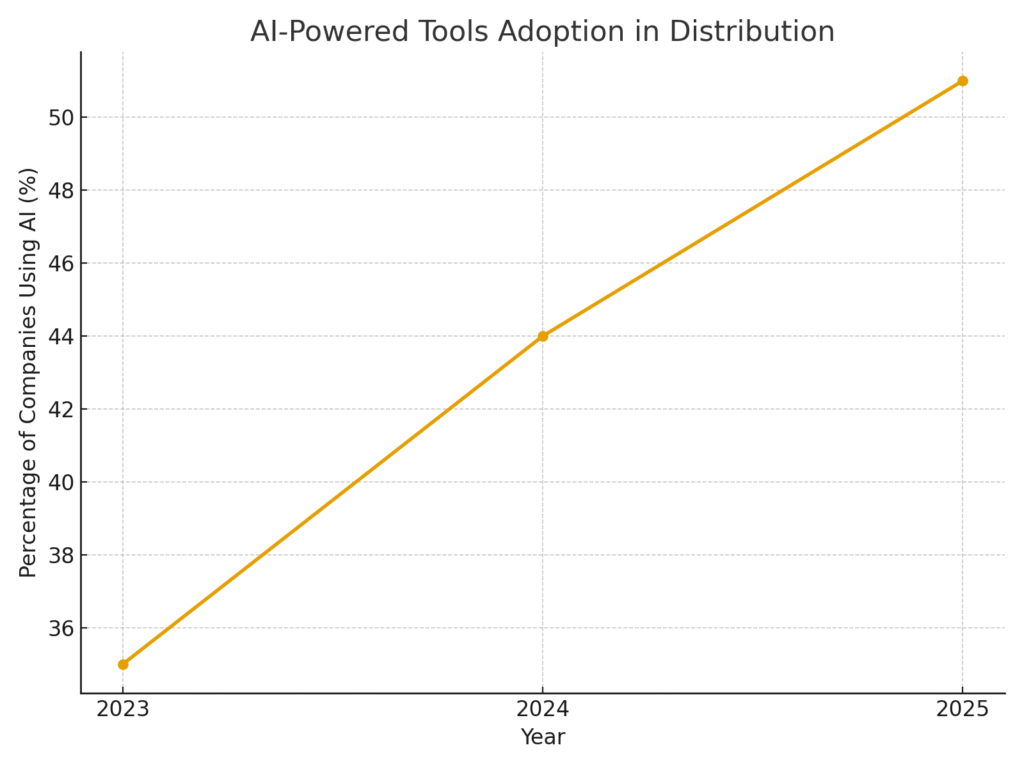
Distribution Marketing Statistics #13: 51% Of Global Companies Use AI-Powered Tools To Optimize Distribution Campaigns
AI is transforming distribution strategies worldwide. Over half of companies now use AI to make campaigns smarter and more efficient. From predicting demand to personalizing offers, AI streamlines both marketing and logistics. This adoption reflects a commitment to innovation. It’s a sign that technology and distribution will remain closely linked in 2025.
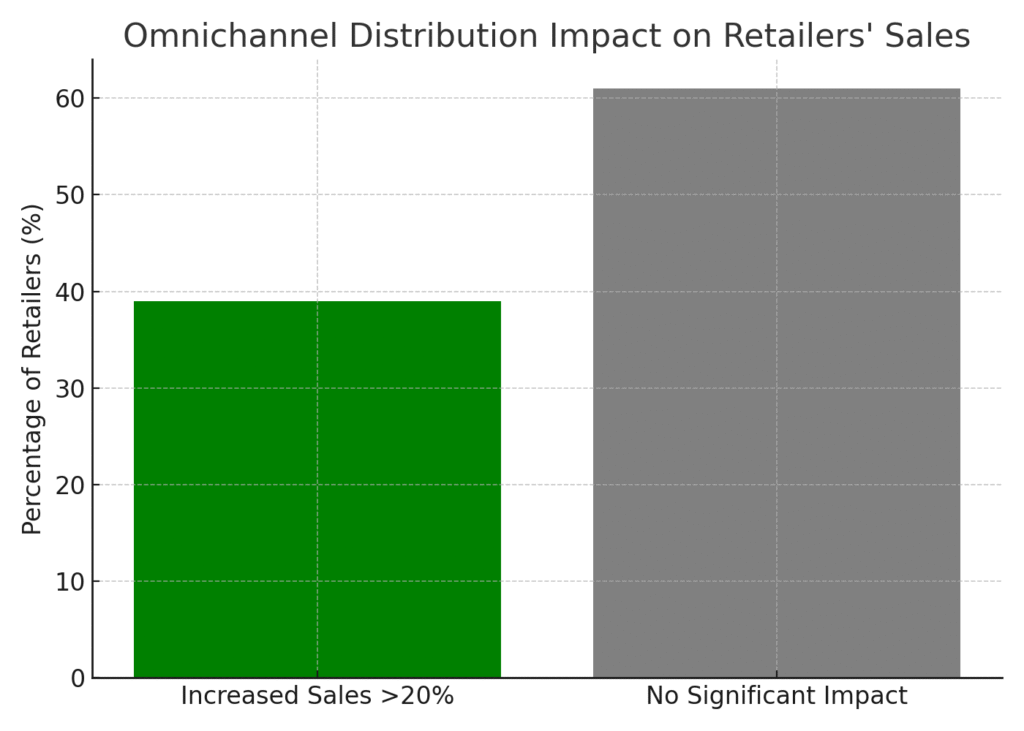
Distribution Marketing Statistics #14: 39% Of Retailers Report Omnichannel Distribution Increased Sales By Over 20%
Omnichannel is no longer optional—it’s profitable. Nearly 40% of retailers have seen sales rise significantly through omnichannel strategies. Customers love the flexibility of buying online, in-store, or through apps. This consistency creates stronger loyalty and repeat sales. Omnichannel distribution proves the value of being everywhere the customer is.
Distribution Marketing Statistics #15: 57% Of Logistics Marketers Use Predictive Analytics For Distribution Demand
Predictive analytics is becoming mainstream in distribution planning. Over half of marketers use it to anticipate demand and adjust strategies. This reduces waste, improves efficiency, and boosts customer satisfaction. Campaigns built around predictive insights are more responsive to real needs. It highlights how data science is reshaping marketing distribution.
Distribution Marketing Statistics #16: 44% Of B2B Marketers Say Distribution Webinars And Demos Outperform Email Campaigns
For B2B marketing, distribution-focused webinars and demos are proving more effective than emails. Nearly half of B2B marketers say these methods engage prospects better. Interactive formats allow customers to see products in action. This creates more trust and speeds up decision-making. It’s an example of distribution driving engagement directly.
Distribution Marketing Statistics #17: 66% Of Companies Believe Poor Distribution Leads Directly To Customer Churn
Two-thirds of companies recognize the dangers of poor distribution. Delays, mistakes, or unreliable delivery can cost loyal customers. Marketing campaigns can’t fix bad distribution experiences. Brands that fail here often lose long-term relationships. This stat emphasizes how critical distribution is to customer retention.
Distribution Marketing Statistics #18: 32% Of Businesses Now Use Blockchain For Secure And Transparent Distribution
Blockchain is entering the distribution space. Nearly a third of businesses use it for transparency and security. Customers gain confidence when they can trace product origins and movement. Marketing teams often highlight blockchain usage as a trust-building feature. It’s one of the more innovative tools reshaping distribution.
Distribution Marketing Statistics #19: 53% Of Global Firms Invest In Last-Mile Distribution As A Key Marketing Message
Last-mile delivery is more than logistics—it’s a marketing promise. Over half of firms now highlight their last-mile capabilities in campaigns. Customers care deeply about how quickly and conveniently products arrive. Brands are turning this into a competitive differentiator. It shows that even the smallest leg of distribution can have a big marketing impact.
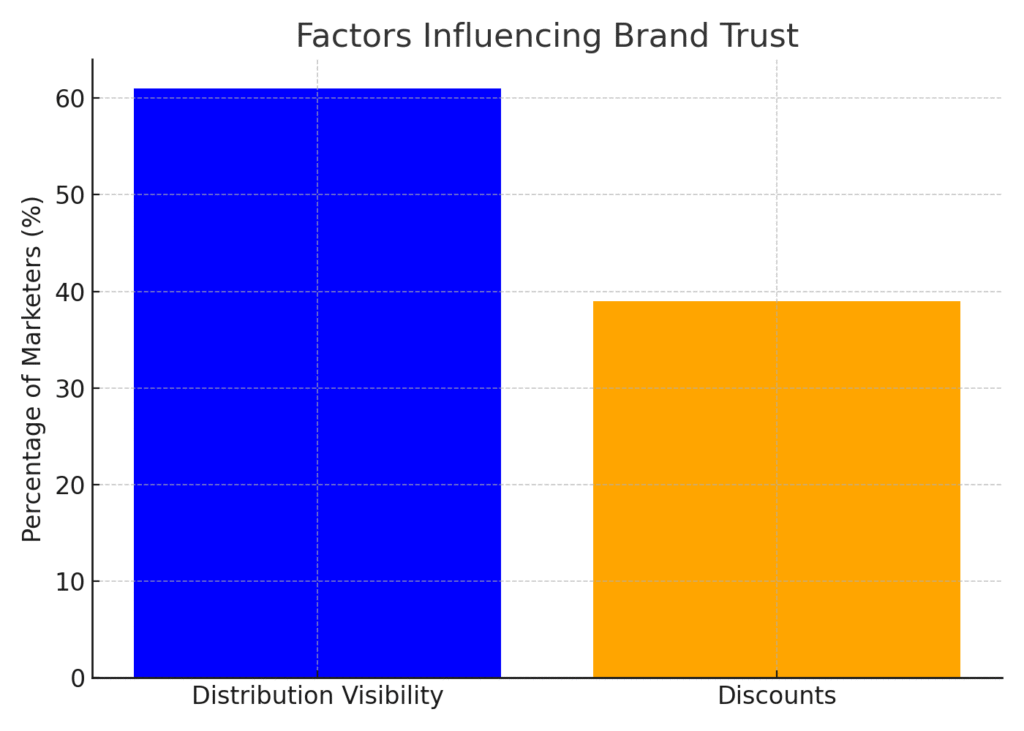
Distribution Marketing Statistics #20: 61% Of Marketers Say Distribution Visibility Influences Brand Trust More Than Discounts
This statistic shows how much customers value transparency. More than 60% of marketers believe distribution visibility creates more trust than offering discounts. Customers want to know where their product is and when it will arrive. By making visibility a marketing focus, brands strengthen loyalty. It suggests that communication is as valuable as price cuts.
Final Thoughts On Distribution Marketing Statistics 2025
As I reflect on these distribution marketing statistics, I can’t help but feel how vital distribution has become in shaping the customer journey. It’s not just about products arriving at the right place anymore—it’s about trust, sustainability, partnerships, and the overall experience. Personally, I’ve realized that the more a company treats distribution as part of its marketing, the more lasting relationships it builds with customers. If I were working with a leading marketing agency in New York, I know these insights would form the backbone of strategies that truly resonate with audiences in 2025. Distribution may once have been behind the scenes, but today, it’s front and center in every marketing conversation.
SOURCES