



20 Sep TOP 20 HANDMADE PRODUCTS MARKETING STATISTICS 2025
When it comes to understanding how creativity meets commerce, handmade products marketing statistics provide some of the clearest insights into consumer behavior and business potential. The handmade market isn’t just about crafts—it’s about storytelling, cultural value, and the growing consumer demand for sustainability. From global billion-dollar growth projections to the simple truth that people are willing to pay more for something unique, these statistics reflect a movement that goes beyond mass production. As a marketing agency in New York, we’ve seen firsthand how brands that embrace authenticity and artisan values can connect with audiences on a much deeper level. This introduction is here to set the stage for the numbers that not only inform, but also inspire strategies for makers and marketers alike.
Top 20 Handmade Products Marketing Statistics 2025 (Editor’s Choice)
| # | Statistic | Details |
|---|---|---|
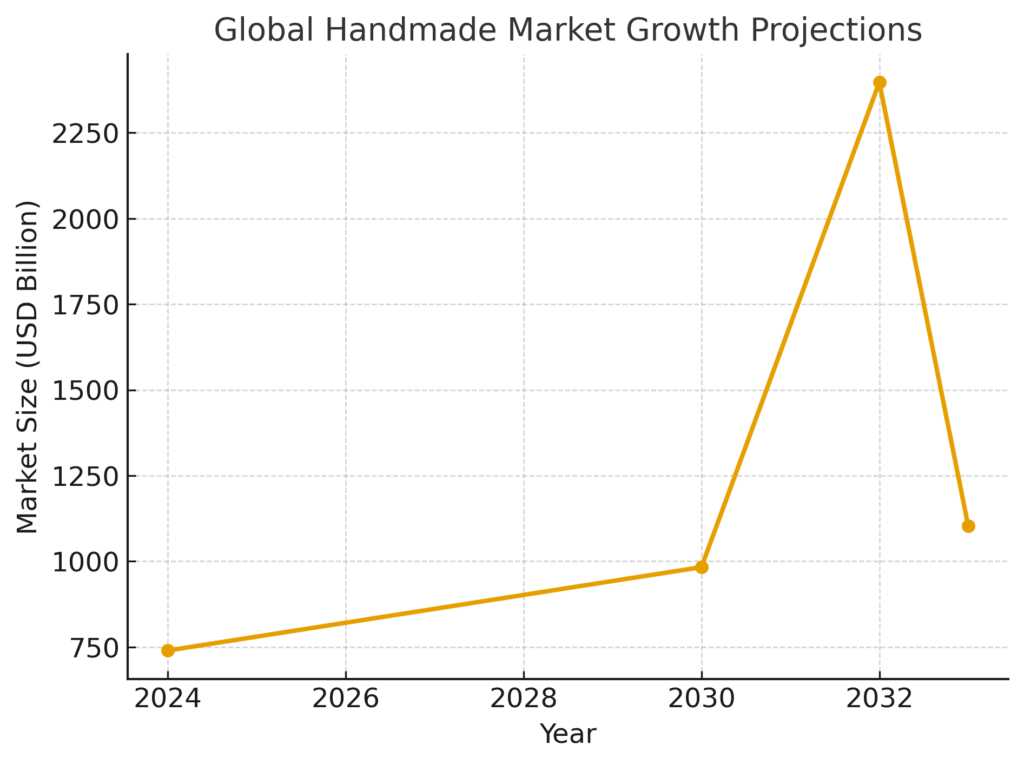
| 1 | Global Market Value 2024 | Valued at USD 739.95B, projected to reach USD 983.12B by 2030, CAGR ~4.9%. |
| 2 | Alternative Market Estimate | USD 1,107.67B in 2024, expected to reach USD 2,397.15B by 2032 (CAGR ~10.15%). |
| 3 | Market Forecast | USD 726.59B in 2024, growing to USD 1,103.25B by 2033 (CAGR ~8.3%). |
| 4 | U.S. Handicrafts Market | Expected to reach USD 199.47B by 2030 (up from USD 155.3B in 2023). |
| 5 | Consumer Preference | Growing demand for unique, handmade, and eco-friendly products. |
| 6 | Personalized Goods | 12% of handicraft sales in 2024 came from personalized products. |
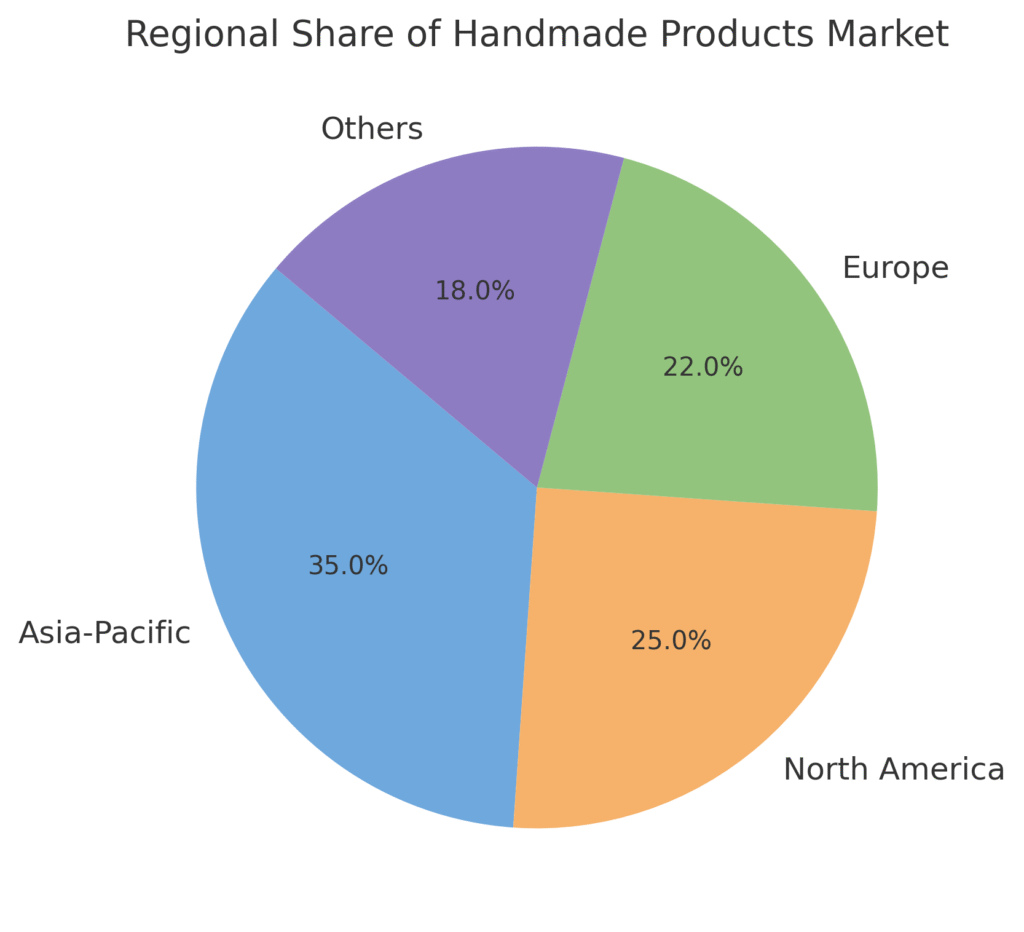
| 7 | Asia-Pacific Market Share | Dominates global market with ~34-36% share in 2024. |
| 8 | North America Growth | Strong growth in home décor and woodwork categories. |
| 9 | Top Product Type | Woodwork holds the largest revenue share globally. |
| 10 | Fastest Growing Segment (U.S.) | Glassware emerging as one of the fastest growing categories. |
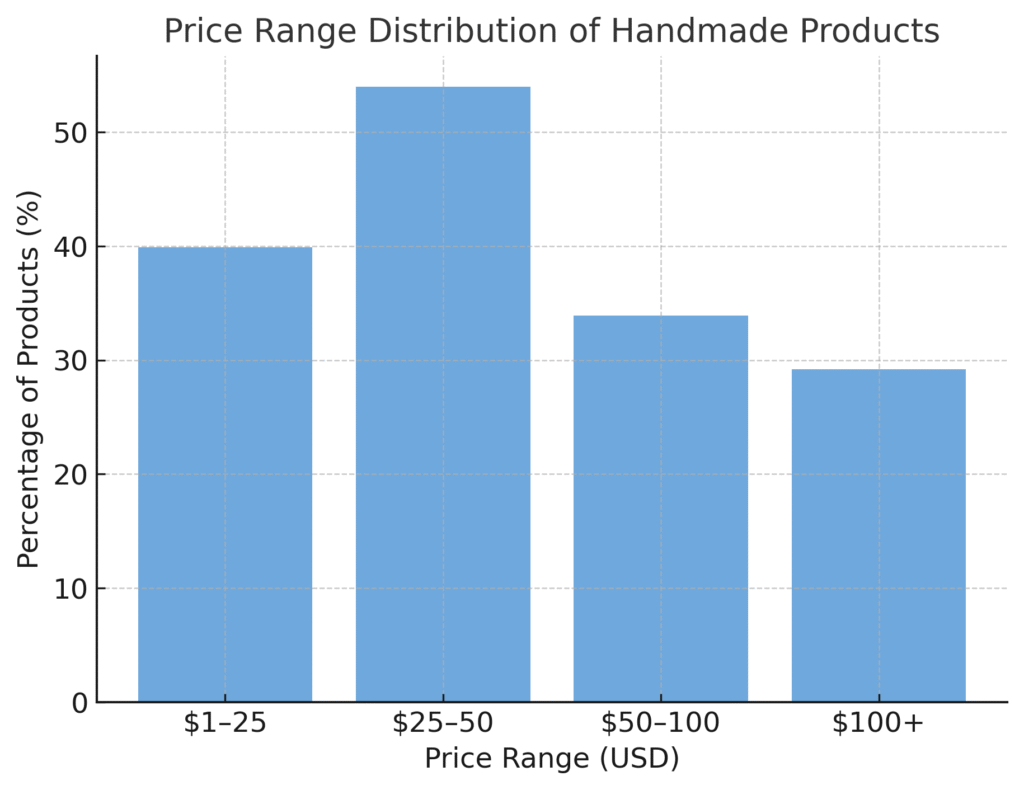
| 11 | Price Range: $1–25 | 39.9% of handmade products priced in this range. |
| 12 | Price Range: $25–50 | 54% of products priced between $25–50. |
| 13 | Price Range: $50–100 | 33.9% of handmade items priced within $50–100. |
| 14 | Price Range: $100+ | 29.2% of products priced above $100. |
| 15 | Quality Perception | 23% of U.S. adults strongly believe handmade goods are high quality. |
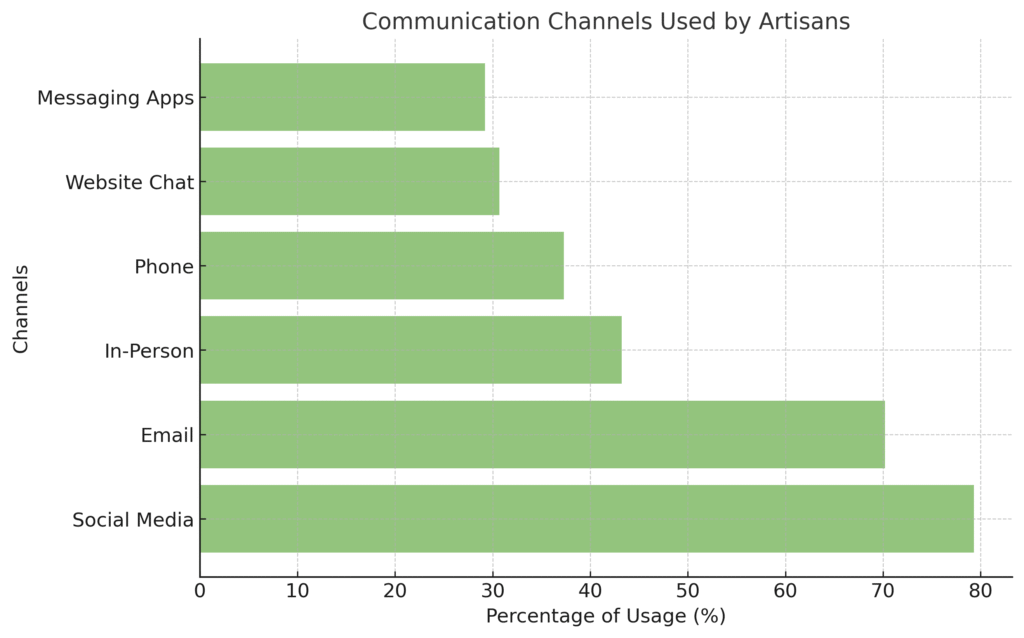
| 16 | Social Media Usage | 79.3% of artisans use social media to connect with customers. |
| 17 | Email Communication | 70.2% of makers use email to reach buyers. |
| 18 | Other Communication | 43.2% in-person, 37.3% phone, 30.7% website/live chat, 29.2% messaging apps. |
| 19 | Craft Supplies Market | Valued at USD 41.08B in 2024, expected to hit USD 62.31B by 2034 (CAGR ~4.25%). |
| 20 | Artisan Jobs | Global artisan industry supports ~300 million jobs worldwide. |
Top 20 Handmade Products Marketing Statistics 2025
Handmade Products Marketing Statistics #1 – Global Market Value 2024
The global handicrafts market reached an impressive value of USD 739.95 billion in 2024. Analysts project it will grow to USD 983.12 billion by 2030. This steady CAGR of around 4.9% shows resilience in consumer demand for handmade items. The growth highlights the importance of positioning handmade products as premium and culturally rich. For marketers, this number sets the stage for massive opportunities in brand expansion.
Handmade Products Marketing Statistics #2 – Alternative Market Estimate
Another estimate suggests the market was worth USD 1,107.67 billion in 2024. Projections expect it to nearly double, reaching USD 2,397.15 billion by 2032. This version indicates a stronger CAGR of about 10.15%, suggesting accelerated growth. These differences show how large and diverse the handmade industry really is. Businesses must align their strategies with this upward trajectory.
Handmade Products Marketing Statistics #3 – Market Forecast
The handicraft sector is also forecasted at USD 726.59 billion in 2024. By 2033, the value could rise to USD 1,103.25 billion. This reflects a CAGR of 8.3%, emphasizing long-term sustainability. The strong numbers make clear that handmade products aren’t a niche trend anymore. They are becoming a mainstream driver of retail markets globally.
Handmade Products Marketing Statistics #4 – U.S. Handicrafts Market
In the United States, the handicrafts market continues to expand steadily. From USD 155.3 billion in 2023, it is expected to reach USD 199.47 billion by 2030. This growth represents a healthy CAGR of about 3.6–3.7%. It proves that even in developed markets, consumers value handmade artistry. Local artisans have strong opportunities to thrive through both offline and online channels.
Handmade Products Marketing Statistics #5 – Consumer Preference
Consumers increasingly lean toward handmade goods because they stand for authenticity. Many prefer unique, eco-friendly, and sustainable products over mass-produced alternatives. This shift has fueled the demand for artisan craftsmanship across the globe. For marketers, it means campaigns must highlight individuality and ethical sourcing. The emotional appeal behind handmade goods is now a core selling point.
Handmade Products Marketing Statistics #6 – Personalized Goods
In 2024, personalized handmade items accounted for around 12% of all handicraft sales. Customers are willing to pay a premium for customization. This includes engraved jewelry, tailored clothing, and bespoke décor. Personalization connects directly with consumer emotions, driving loyalty. For small businesses, this is a huge opportunity to stand out from competitors.
Handmade Products Marketing Statistics #7 – Asia-Pacific Market Share
Asia-Pacific commands the largest share of the global handmade products market. In 2024, it accounted for nearly 34–36% of sales. This dominance comes from countries like India, China, and Indonesia. The region’s cultural heritage and cost-effective production give it an edge. For global marketers, Asia remains a key supply and growth hub.
Handmade Products Marketing Statistics #8 – North America Growth
North America is showing strong growth in artisan goods. Categories like home décor and woodwork are especially popular. The U.S. market is embracing handmade goods through both retail and e-commerce. Consumers here value quality and storytelling behind products. This makes digital marketing campaigns critical for connecting artisans with buyers.
Handmade Products Marketing Statistics #9 – Top Product Type (Woodwork)
Woodwork is consistently one of the top-performing categories in handmade markets. Items like furniture, sculptures, and décor command premium pricing. The durability and timeless appeal of wood-based products drive demand. Artisans skilled in woodwork find steady opportunities globally. Marketing should emphasize craftsmanship and the natural, sustainable aspect of wood.
Handmade Products Marketing Statistics #10 – Fastest Growing Segment (U.S. Glassware)
Glassware is emerging as one of the fastest-growing segments in the U.S. market. Handmade glass items combine functionality with artistry. Consumers value them for both aesthetic and cultural appeal. This growth suggests a rising appetite for specialized craft segments. Targeted marketing can help artisans capture these niche but lucrative markets.
Handmade Products Marketing Statistics #11 – Price Range: $1–25
Around 39.9% of handmade products are priced in the $1–25 range. This shows that affordability remains an important factor for many buyers. Small crafts, souvenirs, and entry-level décor dominate this category. These products serve as an accessible introduction to the handmade world. Marketers can use these low-price items to build brand awareness.
Handmade Products Marketing Statistics #12 – Price Range: $25–50
About 54% of handmade items fall in the $25–50 bracket. This range represents the sweet spot for artisan sales. Consumers see it as affordable yet still premium compared to mass-produced goods. Jewelry, small furniture, and custom gifts thrive in this segment. Marketers can target middle-class buyers with lifestyle-driven messaging.
Handmade Products Marketing Statistics #13 – Price Range: $50–100
Nearly 33.9% of handmade products are priced at $50–100. This segment attracts customers looking for higher value without being luxury buyers. It includes unique apparel, décor, and medium-sized crafts. Shoppers in this group often prioritize quality and exclusivity. Marketing strategies should highlight durability and artistry to justify the price.
Handmade Products Marketing Statistics #14 – Price Range: $100+
About 29.2% of handmade goods are priced above $100. This range targets high-income buyers seeking exclusivity. Items include luxury jewelry, fine art, and designer pieces. The willingness to pay reflects the perceived uniqueness of handmade products. Marketing in this category must focus on prestige and rarity.
Handmade Products Marketing Statistics #15 – Quality Perception
A survey revealed that 23% of U.S. adults strongly believe handmade products are high quality. This perception is central to sustaining artisan markets. Consumers see handmade items as more authentic and carefully crafted. It strengthens the argument for pricing products above mass-market alternatives. Marketing should leverage this trust to reinforce premium positioning.
Handmade Products Marketing Statistics #16 – Social Media Usage
A remarkable 79.3% of artisans use social media to reach customers. Platforms like Instagram, Facebook, and TikTok are popular for showcasing crafts. Visual storytelling plays a key role in attracting buyers. Artisans benefit from low-cost, high-reach marketing through these channels. For marketers, optimizing social strategies is essential for handmade success.
Handmade Products Marketing Statistics #17 – Email Communication
Email remains a reliable communication channel for artisans. About 70.2% use it to connect with buyers and maintain relationships. It allows for sharing updates, discounts, and product launches. Personalized email marketing builds customer loyalty over time. This proves that even traditional digital methods are effective for artisan businesses.
Handmade Products Marketing Statistics #18 – Other Communication Channels
Beyond email and social media, artisans use diverse communication methods. About 43.2% rely on in-person contact, while 37.3% use phone. Roughly 30.7% utilize website live chat, and 29.2% use messaging apps. These numbers show the importance of multi-channel engagement. Successful marketing combines both personal and digital approaches.
Handmade Products Marketing Statistics #19 – Craft Supplies Market
The craft supplies market was valued at USD 41.08 billion in 2024. It is projected to hit USD 62.31 billion by 2034. This reflects a CAGR of around 4.25%. The demand for supplies indicates healthy growth for the handmade ecosystem. Marketing opportunities also extend to businesses serving artisans with materials.
Handmade Products Marketing Statistics #20 – Artisan Jobs
The global artisan industry supports around 300 million jobs worldwide. This highlights its importance as both a cultural and economic force. Many of these jobs are in developing countries where crafts sustain communities. It proves handmade markets impact livelihoods on a global scale. Marketing must balance profit with social responsibility in this industry.
The Bigger Picture of Handmade Products Marketing
Looking at these handmade products marketing statistics, one thing becomes clear: the future of this industry is driven by passion and personalization. Consumers are actively seeking products that feel genuine, support local talent, and align with eco-friendly values. For artisans and small businesses, this represents both a challenge and a massive opportunity to stand out by telling their stories in creative ways. The numbers don’t just highlight economic growth—they underline the emotional connection between buyers and makers that mass-produced items can’t replicate. And as we continue to watch this space evolve, it’s the human element behind each handmade piece that will remain its greatest marketing strength.
SOURCES
-
- https://customcy.com/blog/craft-handmade-stats/ (Customcy)
- https://www.expertmarketresearch.com/reports/handicrafts-market (Claight)
- https://www.credenceresearch.com/report/handicrafts-market (Credence Research Inc.)
- https://www.marketdataforecast.com/market-reports/handicrafts-market (Market Data Forecast)
- https://uk.finance.yahoo.com/news/arts-crafts-market-analysis-business-150000046.html (Yahoo Finance)
- https://www.prnewswire.com/news-releases/handicrafts-market-to-reach-usd-2317183-92-million-by-2030–growing-at-an-11-00-cagr–credence-research-302393405.html (PR Newswire)
- https://www.imarcgroup.com/europe-handicrafts-market (IMARC Group)
- https://customcy.com/blog/craft-handmade-stats/
- https://ruralhandmade.com/blog/handmade-in-demand-a-look-into-consumer-behavior-and-the (Rural Handmade)
- https://www.imarcgroup.com/handicrafts-market-report-by-product-type-online-stores-growth‐
- https://www.businessresearchinsights.com/market-reports/arts-crafts-retail-professional-market-120350 (Business Research Insights)
- https://customcy.com/blog/craft-handmade-stats/
- https://www.expertmarketresearch.com/reports/handicrafts-market
- https://www.imarcgroup.com/country-report-handicrafts-market-india