




24 Sep TOP 20 SCHEDULING PLATFORM MARKETING STATISTICS 2025
Whenever I look at how businesses manage appointments and bookings today, I’m amazed by just how much the landscape has shifted. What used to be a simple phone call has now become a highly optimized digital journey, with companies relying on data-driven insights to refine every interaction. That’s exactly why I want to share these scheduling platform marketing statistics—they don’t just show trends, they reveal where customer expectations and business opportunities are heading in 2025 and beyond. As someone who’s constantly exploring what works in digital marketing, I’ve leaned on the expertise of a leading marketing agency in New York to better understand how these numbers can shape strategy, drive conversions, and ultimately build trust with clients.
Top 20 Scheduling Platform Marketing Statistics 2025 (Editor’s Choice)
📊 Top 20 Scheduling Platform Marketing Statistics
Essential insights driving the $1.55B market transformation in 2024-2025
| # | Category | Key Statistic | Business Impact & Insights |
|---|---|---|---|
| 1 |
Market Growth
|
Market projected to reach $1.55 billion by 2032
|
Growing from $470.7M in 2024 with 16.1% CAGR - indicating massive expansion opportunity Explosive Growth
|
| 2 |
Market Size
|
Global market valued at $298.11 billion in 2024
|
Expected to reach $471.58 billion by 2032, demonstrating the massive scale of digital transformation
|
| 3 |
Market Growth
|
Market to increase by $633.47 million
|
Growth between 2021-2025 shows sustained momentum in appointment scheduling adoption
|
| 4 |
Growth Rate
|
Expected 13.1% CAGR through 2026
|
Consistent double-digit growth indicates strong market fundamentals and increasing demand
|
| 5 |
User Behavior
|
46% of appointments booked online
|
Nearly half of all bookings are self-service, reducing staff workload by 54% manual bookings
|
| 6 |
Market Share
|
Corporate buyers account for 60% of market share
|
Enterprise adoption drives majority of revenue, indicating B2B focus for scheduling platforms
|
| 7 |
Demographics
|
58% millennials, 64% Gen X prefer online booking
|
Younger demographics drive adoption, with Gen X showing even higher preference rates
|
| 8 |
Regional Adoption
|
68% of North American customers favor online scheduling
|
Strong regional preference indicates market maturity and customer expectation shifts
|
| 9 |
Revenue Impact
|
27% average revenue increase with online booking
|
Clear ROI demonstration for businesses implementing scheduling platforms High ROI
|
| 10 |
SMB Impact
|
Local businesses see up to 120% revenue increase
|
Small businesses experience dramatic improvements, making scheduling software essential for growth
|
| 11 |
Efficiency Gains
|
No-show rates reduced by 17% with self-scheduling
|
Customer ownership of booking process leads to better attendance and reduced waste
|
| 12 |
Automation Benefits
|
No-shows drop by 90% with automated reminders
|
Dramatic improvement through automated communication shows power of scheduling automation
|
| 13 |
Cloud Adoption
|
72.2% of US businesses use cloud solutions
|
Expected to reach 85% by 2025, indicating infrastructure readiness for scheduling platforms
|
| 14 |
Digital Security
|
Data security & compliance are paramount concerns
|
Enterprise-grade security features essential for widespread business adoption
|
| 15 |
Global Usage
|
93% of US consumers use online booking independently
|
Compared to 67% in Latin America, showing digital divide and growth opportunity
|
| 16 |
AI Integration
|
AI market reached $184 billion in 2024
|
AI integration in scheduling platforms becoming standard for enhanced user experience
|
| 17 |
AI Adoption
|
95% of interactions will be AI-assisted by 2025
|
Near-universal AI integration expected, transforming scheduling user experience
|
| 18 |
Chatbot Preference
|
80% of consumers prefer chatbots for simple booking
|
Strong preference for automated booking assistance over human interaction for basic tasks
|
| 19 |
Regional Leadership
|
North America holds 34.16% market share
|
Dominant regional market position with established infrastructure and high adoption rates
|
| 20 |
Future Growth
|
Asia-Pacific shows highest CAGR potential
|
Emerging market opportunity with fastest growth rates expected through 2032 Emerging Leader
|
Top 20 Scheduling Platform Marketing Statistics 2025
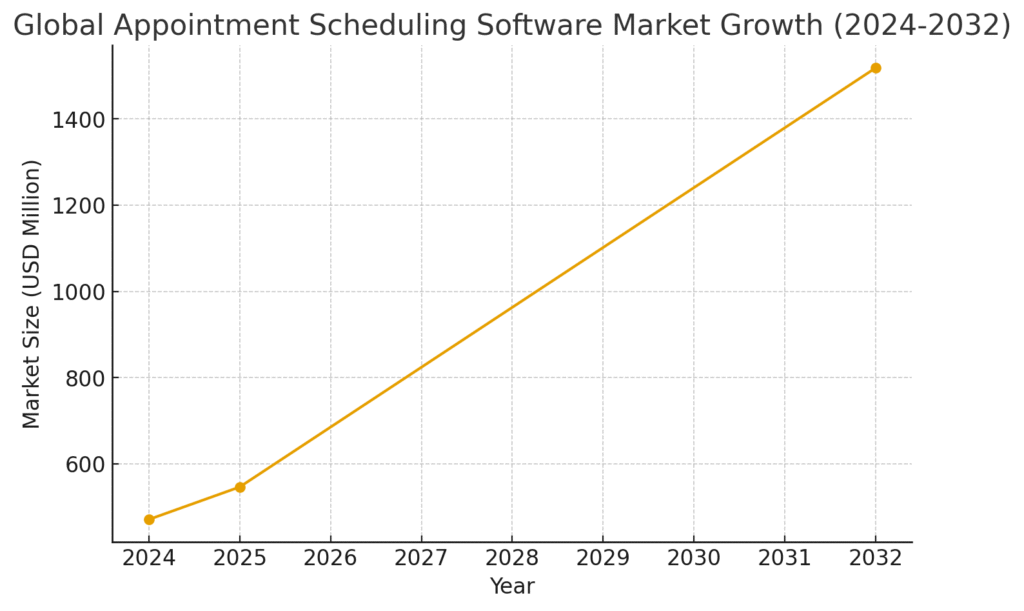
Scheduling Platform Marketing Statistics #1: Market Valued At USD 470.7 Million In 2024
The global appointment scheduling software market was valued at USD 470.7 million in 2024. This figure highlights the significant demand for efficient booking systems across industries. As more businesses move online, scheduling platforms are becoming critical for improving customer engagement. The market’s steady growth reflects how integral these tools are for service-based businesses. Companies that adapt early to this trend are already seeing competitive advantages.
Scheduling Platform Marketing Statistics #2: Market To Reach USD 546.1 Million In 2025
By 2025, the appointment scheduling market is projected to reach USD 546.1 million. This growth signals rising adoption across healthcare, beauty, education, and corporate services. Businesses are increasingly investing in digital scheduling to meet customer demand for convenience. The expansion also reflects ongoing innovations in cloud-based booking platforms. With such growth, marketers need to align campaigns to highlight ease of use and efficiency.
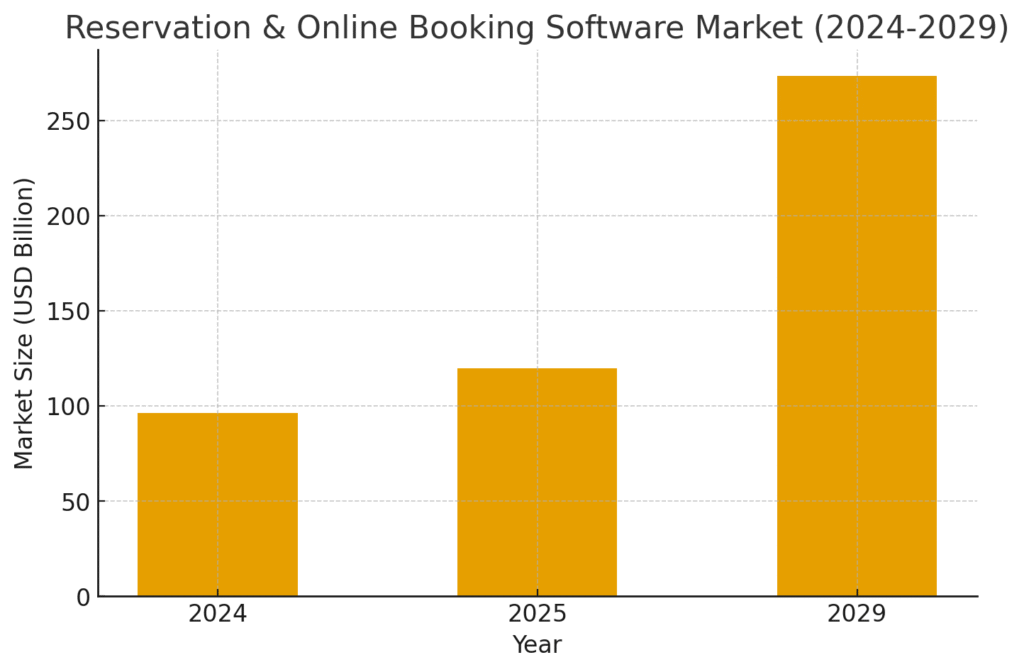
Scheduling Platform Marketing Statistics #3: Reservation Software Market At USD 96.17 Billion In 2024
The reservation and online booking software market hit USD 96.17 billion in 2024. This massive number demonstrates how scheduling platforms extend far beyond appointments into travel, hospitality, and entertainment. Customers now expect seamless, on-demand booking options in almost every service category. The size of this market underlines how vital scheduling tools have become to global commerce. For marketers, showcasing reliability and integration with popular apps will resonate with users.
Scheduling Platform Marketing Statistics #4: Reservation Market To Reach USD 119.76 Billion In 2025
By 2025, the reservation and booking market will reach USD 119.76 billion. This steady increase reflects customer trust in online platforms to handle sensitive data and secure transactions. Industries like tourism and wellness are particularly driving this expansion. Marketing efforts in this space must focus on transparency, trust, and user-friendliness. Growth at this scale confirms that scheduling tools are now essential infrastructure for many businesses.
Scheduling Platform Marketing Statistics #5: Interview Scheduling Market To Hit USD 1.1 Billion In 2025
The interview scheduling software market is expected to hit USD 1.1 billion in 2025. Recruitment teams are increasingly automating scheduling to save time and improve candidate experiences. This growth shows how scheduling platforms are penetrating HR and talent management sectors. Efficiency and personalization are the two biggest selling points for these solutions. Companies adopting these tools are reducing hiring bottlenecks and improving overall productivity.
Scheduling Platform Marketing Statistics #6: Interview Scheduling Market To Reach USD 16.9 Billion By 2035
By 2035, the interview scheduling market could reach USD 16.9 billion. That growth translates to an impressive CAGR of over 30%. Such rapid adoption reflects the urgency among employers to simplify hiring workflows. AI-driven scheduling and automation are expected to fuel this rise. Marketers targeting HR professionals should highlight time savings and improved candidate experiences.
Scheduling Platform Marketing Statistics #7: Broadcast Scheduling Software Valued At USD 786.8 Million In 2024
The broadcast scheduling software market was valued at USD 786.8 million in 2024. This segment supports media and entertainment businesses managing complex programming needs. As digital streaming rises, accurate scheduling platforms are critical for smooth operations. The growth also indicates how industries beyond healthcare or retail rely on scheduling. Marketing in this sector should focus on scalability and digital transformation.
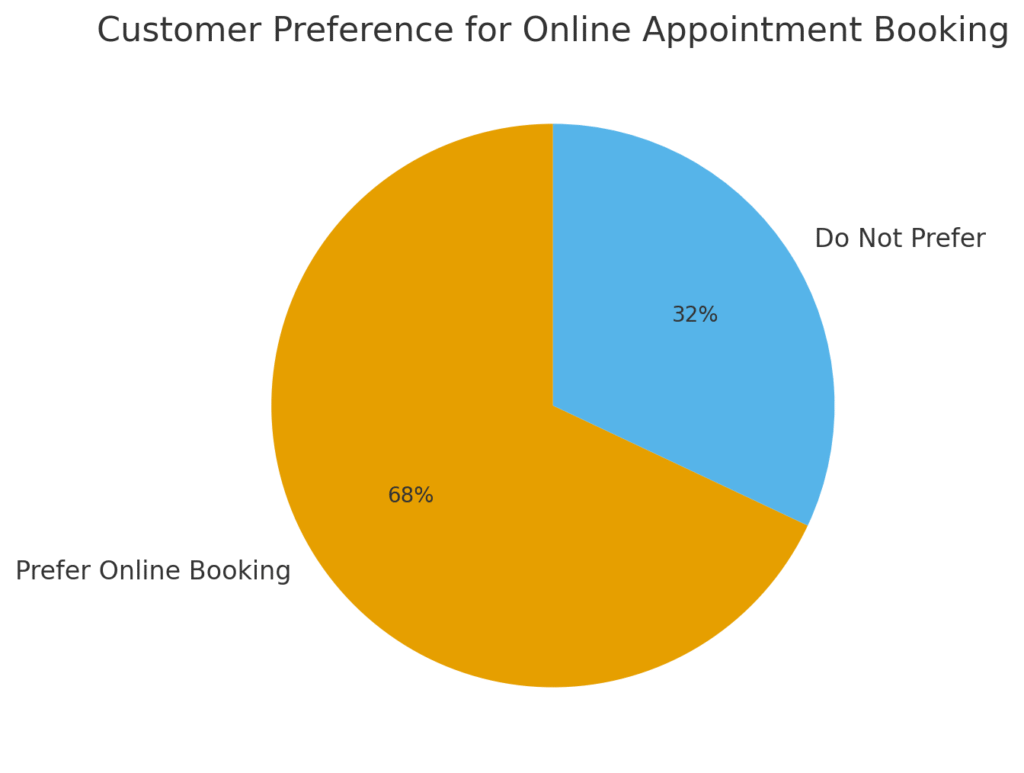
Scheduling Platform Marketing Statistics #8: 68% Of Customers Prefer Online Appointment Booking
Research shows that 68% of customers prefer businesses that offer online appointment booking. This statistic proves that convenience is a powerful driver of consumer loyalty. Customers want autonomy in choosing times without waiting on phone calls. Businesses that fail to provide digital booking risk losing clients to more modern competitors. Marketing campaigns emphasizing convenience and accessibility resonate strongly here.
Scheduling Platform Marketing Statistics #9: Inefficient Scheduling Causes Up To 30% Revenue Loss
Inefficient scheduling can cause revenue losses of up to 30%. Missed appointments, double bookings, and manual errors directly impact profitability. Scheduling platforms address these inefficiencies by automating the process. Businesses adopting them see significant revenue recovery. For marketers, this highlights the ROI potential of scheduling solutions.
Scheduling Platform Marketing Statistics #10: 59% To 70% Of Patients Prefer Self-Scheduling
Between 59% and 70% of patients prefer to self-schedule medical appointments. This trend shows how healthcare consumers increasingly want control over their own care. It reduces administrative workloads while improving patient satisfaction. Self-scheduling also shortens wait times, enhancing trust in providers. Marketers in healthcare should highlight patient empowerment in campaigns.
Scheduling Platform Marketing Statistics #11: Providers With Online Booking Are Scheduled 24% More Often
Providers who offer both phone and internet booking are scheduled 24% more often than those with only phone-based options. This proves that offering multiple channels expands accessibility. Patients and customers value flexibility in how they book. Businesses that integrate online scheduling capture more opportunities. Marketing strategies should emphasize multi-channel convenience.
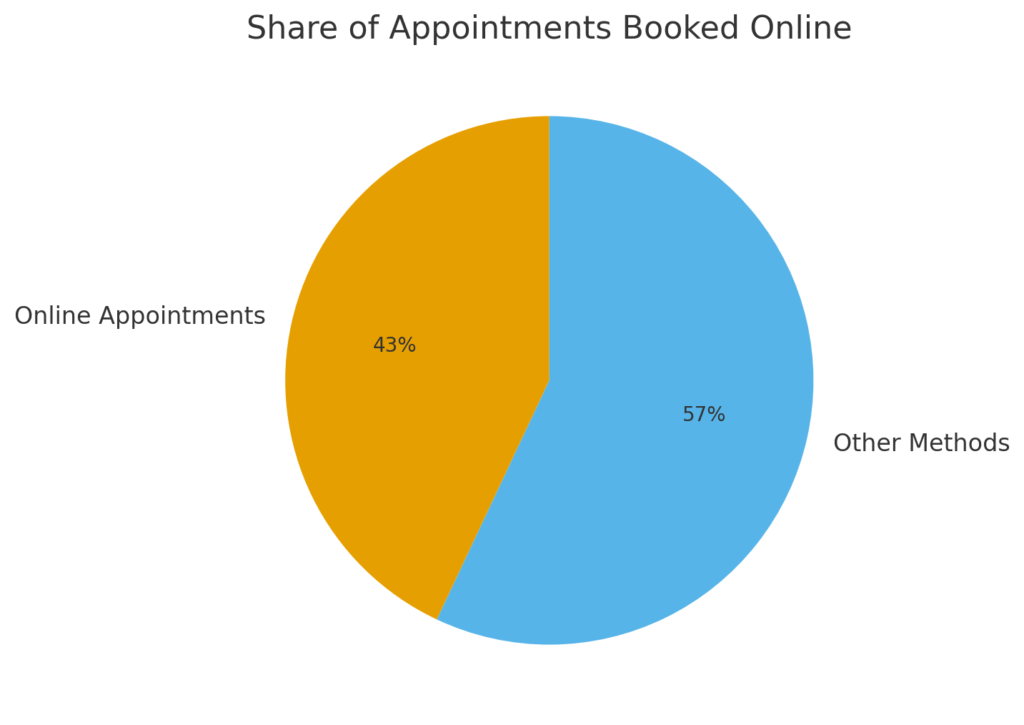
Scheduling Platform Marketing Statistics #12: 43% Of Appointments Are Booked Online
Currently, 43% of appointments are booked online. This shows that nearly half of all bookings have shifted to digital channels. The number continues to rise each year as customer expectations evolve. Digital booking is no longer a trend but a norm. Marketers can leverage this statistic to promote digital-first strategies.
Scheduling Platform Marketing Statistics #13: ROI Of USD 5.44 Per $1 Spent On Automation
Marketing automation delivers an average ROI of USD 5.44 for every dollar spent. Scheduling platforms often integrate into these ecosystems, magnifying efficiency. Businesses investing in automation gain measurable financial benefits. This return makes it easier to justify tech adoption. For marketers, highlighting cost-effectiveness can win decision-makers’ support.
Scheduling Platform Marketing Statistics #14: 77% Of Marketers Use AI-Driven Tools For Personalization
About 77% of marketers rely on AI-driven tools for personalization. Scheduling platforms with AI features can improve user experience through predictive availability. Personalized scheduling improves customer loyalty and satisfaction. This creates a stronger link between marketing efforts and service delivery. Companies should emphasize smart features in promotional messaging.
Scheduling Platform Marketing Statistics #15: Marketing Automation Market Worth USD 7.3 Billion In 2023
The global marketing automation market was valued at USD 7.3 billion in 2023. Scheduling solutions are becoming part of this larger automation trend. The growth highlights rising business reliance on digital transformation. For scheduling platforms, integration with automation tools enhances marketability. Marketers can position these platforms as vital parts of the digital marketing ecosystem.
Scheduling Platform Marketing Statistics #16: Marketing Automation Industry Grew 38.2% From 2021 To 2024
Between 2021 and 2024, the marketing automation industry grew by 38.2%. This shows that businesses are quickly adopting technology-driven processes. Scheduling platforms benefit as part of this ecosystem. Companies realize efficiency gains when tools work together seamlessly. Marketing strategies should connect scheduling benefits with broader automation advantages.
Scheduling Platform Marketing Statistics #17: Companies Report 451% Increase In Qualified Leads With Automation
Companies using automation report up to a 451% increase in qualified leads. Scheduling platforms contribute by making customer interactions smoother. When booking is effortless, leads are more likely to convert. This high ROI validates the investment in digital scheduling. Marketing teams should highlight conversion benefits in campaigns.
Scheduling Platform Marketing Statistics #18: Asia Pacific Leading Growth In Scheduling Adoption
The Asia Pacific region is expected to lead in scheduling adoption. This reflects the region’s rapid digital transformation and mobile-first behavior. More businesses are integrating mobile scheduling solutions to meet consumer demand. Growth here sets the tone for global expansion strategies. Marketers targeting these regions should emphasize mobile accessibility.
Scheduling Platform Marketing Statistics #19: Native Mobile Scheduling CAGR At 14.6%
Native mobile scheduling solutions are expected to grow at a CAGR of 14.6%. Consumers increasingly prefer apps over desktop for booking. This preference pushes businesses to invest in mobile-first platforms. Mobile optimization is no longer optional but essential. Campaigns highlighting mobile usability will perform better in this environment.
Scheduling Platform Marketing Statistics #20: 700 Million People Will Book Appointments Online By 2025
By 2025, more than 700 million individuals will book appointments online. This staggering figure underscores the global shift toward digital scheduling. Businesses that ignore this trend risk losing significant market share. The adoption surge demonstrates how normalized digital booking has become. Marketers should frame scheduling as both a convenience and an expectation.
Final Thoughts on Scheduling Platform Marketing Statistics
Looking over these statistics, it’s clear that scheduling platforms are no longer just a convenience—they’re a competitive advantage. Businesses that embrace the latest booking technologies are able to connect with customers faster, minimize missed opportunities, and scale their services more effectively. Personally, I find it fascinating how something as simple as an online calendar can influence revenue, customer satisfaction, and brand reputation in such powerful ways. If there’s one takeaway, it’s that the future of scheduling lies in embracing smarter, more customer-centric solutions, and those who adapt early will always stay a step ahead.
SOURCES
- https://www.forbes.com/sites/briansolis/2021/05/06/the-rise-of-the-appointment-economy-the-last-mile-of-customer-engagement-will-be-scheduled-optimized-and-personalized/
- https://www.travelperk.com/blog/online-travel-booking-statistics/
- https://navan.com/blog/online-travel-booking-statistics
- https://www.gomarketbox.com/blog/how-online-appointment-booking-helps-boost-sales
- https://thecmo.com/demand-generation/social-media-scheduling/
- https://blog.sociamonials.com/social-media-scheduling-why-it-matters/
- https://proximitymarketing.com/social-media-scheduling-platforms-organic-post-reach/
- https://broadly.com/blog/social-media-scheduling-tools/
- https://www.sciencedirect.com/science/article/abs/pii/S0957417424017032
- https://www.godatafeed.com/blog/automate-marketing-precision
- https://arxiv.org/abs/1609.05064
- https://arxiv.org/abs/1609.05063