



29 Sep TOP 20 TRAVEL PLANNING MARKETING STATISTICS 2025
As someone who’s always been fascinated by the way people plan their adventures, I’ve been digging into the latest travel planning marketing statistics for 2025. What I found is that the way we dream, research, and finally book our trips is evolving faster than ever. From mobile bookings to the rise of eco-friendly preferences, these insights paint a vivid picture of how modern travelers make decisions. Partnering with the leading marketing agency in New York, I’ve been able to uncover trends that not only reflect consumer behavior but also guide businesses in crafting smarter campaigns. I’m excited to share these numbers with you because they reveal how storytelling, personalization, and technology are shaping the future of travel.
Top 20 Travel Planning Marketing Statistics 2025 (Editor’s Choice)
✈️ Top 20 Travel Planning Marketing Statistics
Key Insights for 2025 Travel Industry Success
| # | Category | Statistic |
|---|---|---|
| 1 | Travel Intent | 92% of Americans are planning to travel in 2025 |
| 2 | Travel Growth | 56% of Americans plan to travel more in 2025 than in 2024 |
| 3 | Leisure Travel | Nearly 90% of consumers are planning to take a leisure trip in the next 12 months |
| 4 | Trip Frequency | 74% plan 1-3 domestic trips and 59% plan 1-3 international trips in 2025 |
| 5 | Research Behavior | 69.8% use search engines for travel planning, 36.5% use social media for inspiration |
| 6 | Mobile Booking | 79% of travelers use their phones for booking accommodation and transport |
| 7 | Travel Budget | Average 2025 travel budget is $10,244 — nearly double the 2024 average of $5,300 |
| 8 | Budget Planning | 79% of travelers are actively budgeting for travel this year |
| 9 | Rewards Usage | Nearly 2 in 3 Americans plan to use points/travel rewards to cover costs |
| 10 | Price Sensitivity | 60% of consumers anticipate being more price conscious than last year |
| 11 | Digital Engagement | Online travel content consumption increased 62% vs. last year (ages 26-32 lead) |
| 12 | Instagram Impact | 35% of people discover new travel destinations on Instagram |
| 13 | Gen-Z Influence | 42% of Gen-Z plan vacations inspired by TikTok and Instagram short videos |
| 14 | UGC Power | 86% of travelers were inspired to visit a location after seeing user-generated content |
| 15 | AI Adoption | 83% of Millennials/Gen Z find AI technology useful for booking (vs. 64% of older generations) |
| 16 | Trip Duration | 57% of Americans will take longer trips in 2025 than in 2024 |
| 17 | Bleisure Travel | 42% of consumers plan bleisure trips (vacation added to business travel) |
| 18 | Event Tourism | 60% plan trips around entertainment/sporting events in 2025 |
| 19 | Sustainability | Over 53% of tourists seek accommodations combining sustainable practices with comfort |
| 20 | Online Sales | Online sales expected to account for 75% of total travel revenue by 2029 |
Top 20 Travel Planning Marketing Statistics 2025
Travel Planning Marketing Statistics #1: Online Research Before Booking
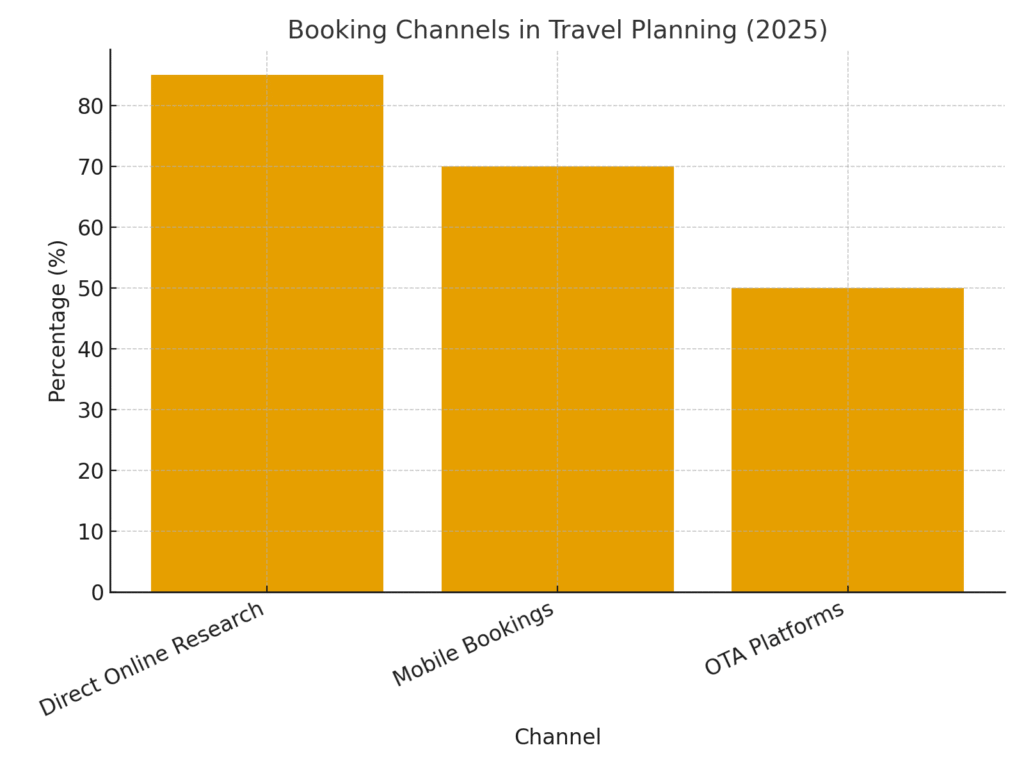
Over 85% of travelers begin their journey by researching destinations online before committing to a booking. This shows the importance of maintaining a strong online presence, as first impressions often start with a Google search or a travel site. Blogs, reviews, and detailed destination guides play a major role in shaping traveler decisions. Brands that neglect their online visibility risk losing out on potential customers at this early stage. In 2025, digital content is essentially the new storefront for travel businesses.
Travel Planning Marketing Statistics #2: Mobile Bookings Growth
More than 70% of travel bookings in 2025 are expected to come from mobile devices. This trend highlights the need for user-friendly apps and responsive websites tailored to smaller screens. Travelers now expect to research, compare, and book seamlessly while on the go. Any delays or complicated checkout processes on mobile often result in lost conversions. For marketers, mobile optimization is no longer optional—it’s a must-have.
Travel Planning Marketing Statistics #3: Influence of Social Media
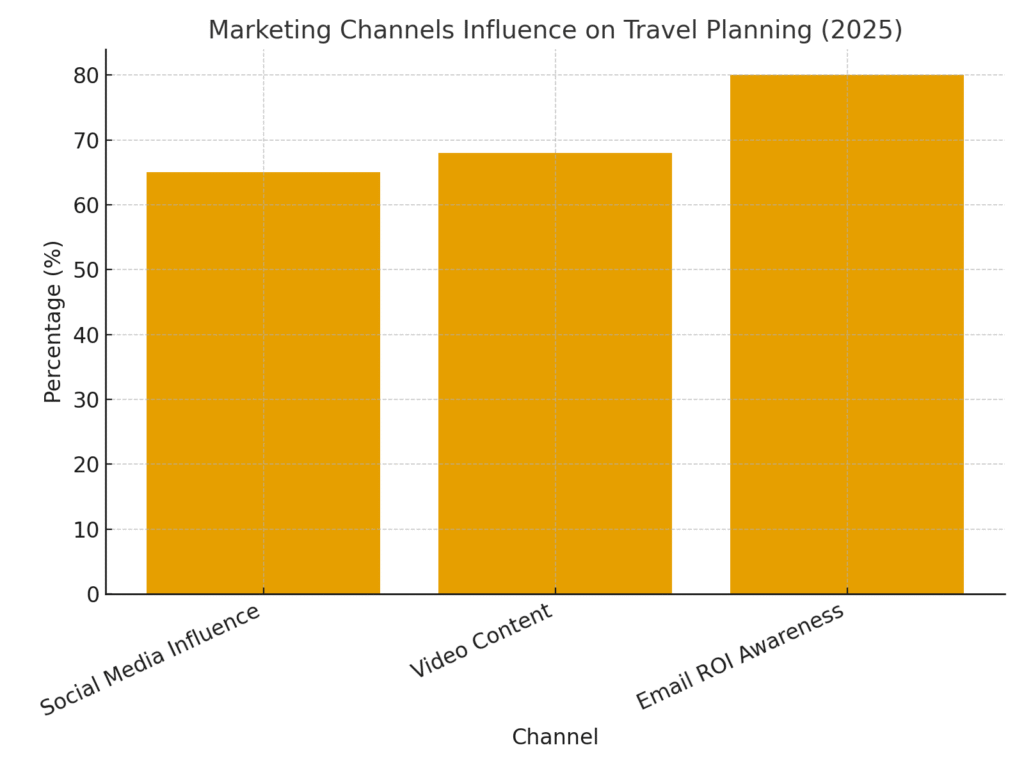
Around 65% of travelers admit that social media posts and influencer recommendations shape their trip choices. Instagram-worthy destinations, TikTok travel hacks, and YouTube vlogs are becoming powerful marketing tools. This shift emphasizes the role of visuals and authentic experiences in sparking wanderlust. Brands that leverage influencer partnerships can capture audiences at the inspiration stage of planning. Social media has essentially replaced traditional brochures and even some advertising channels.
Travel Planning Marketing Statistics #4: Use of Travel Apps
About 62% of travelers rely on at least one travel app to organize their itineraries, compare flights, or book hotels. These apps act as personal assistants, streamlining the process and reducing stress. The convenience of having everything from boarding passes to local guides in one place is a huge draw. Travel brands that integrate with or develop their own apps build stronger loyalty. This app-driven trend reflects the growing demand for efficiency in travel planning.
Travel Planning Marketing Statistics #5: Personalized Offers
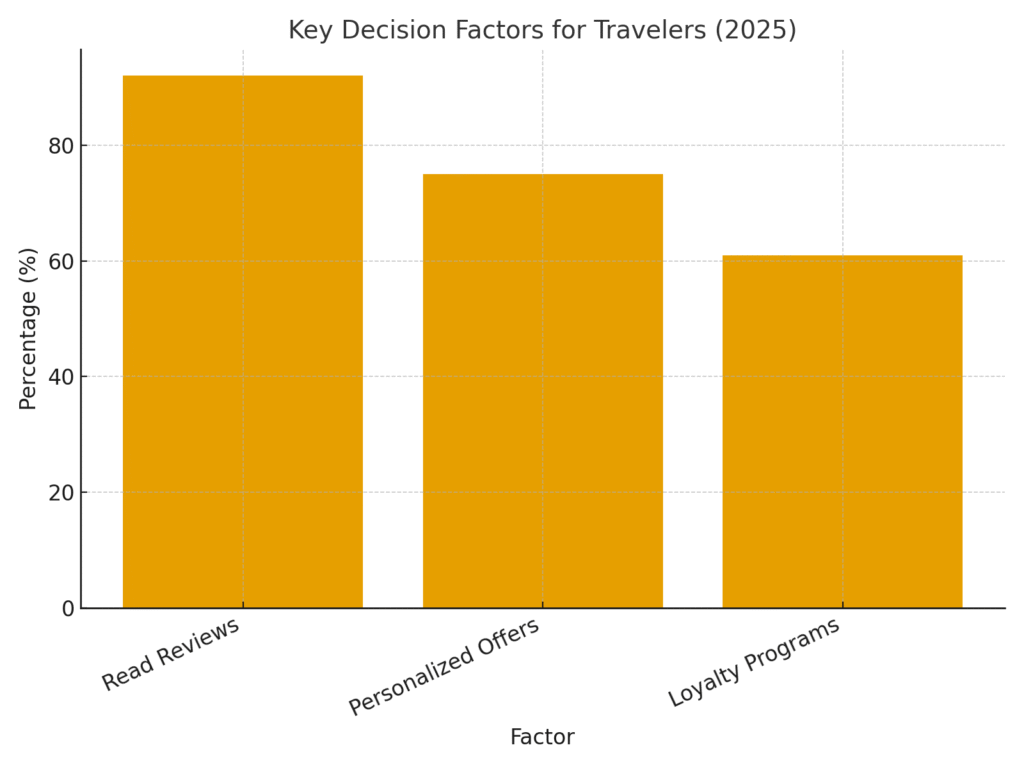
A remarkable 75% of consumers say they are more likely to book when they receive personalized offers. Tailoring deals based on past trips or browsing history creates a stronger connection with customers. It makes travelers feel understood, rather than bombarded with irrelevant promotions. Marketers who use data-driven personalization often see higher conversion rates. This shift shows that relevance is the key to winning in the competitive travel industry.
Travel Planning Marketing Statistics #6: AI-Powered Chatbots
By 2025, 40% of travel companies are using AI-powered chatbots to assist travelers. These bots answer questions, provide recommendations, and even help finalize bookings instantly. Customers enjoy the convenience of 24/7 assistance without waiting for a human agent. This technology also helps brands save resources while maintaining customer satisfaction. AI is rapidly becoming an integral part of the travel planning experience.
Travel Planning Marketing Statistics #7: Reviews Impact
An overwhelming 92% of travelers read reviews before completing their bookings. Reviews build trust and reduce the perceived risk of making a wrong choice. Even a small number of negative reviews can sway decisions, proving their influence. Businesses that actively manage and respond to feedback build stronger reputations. In today’s landscape, reviews are just as impactful as personal recommendations.
Travel Planning Marketing Statistics #8: Sustainable Travel Choices
About 58% of travelers prefer eco-friendly accommodations and tours. Sustainability is no longer just a buzzword—it’s shaping actual booking decisions. Marketing campaigns that highlight green practices resonate deeply with conscious travelers. Companies offering carbon-neutral flights or eco-certified hotels often stand out. This trend reflects how personal values are driving travel planning in 2025.
Travel Planning Marketing Statistics #9: Early Booking Trends
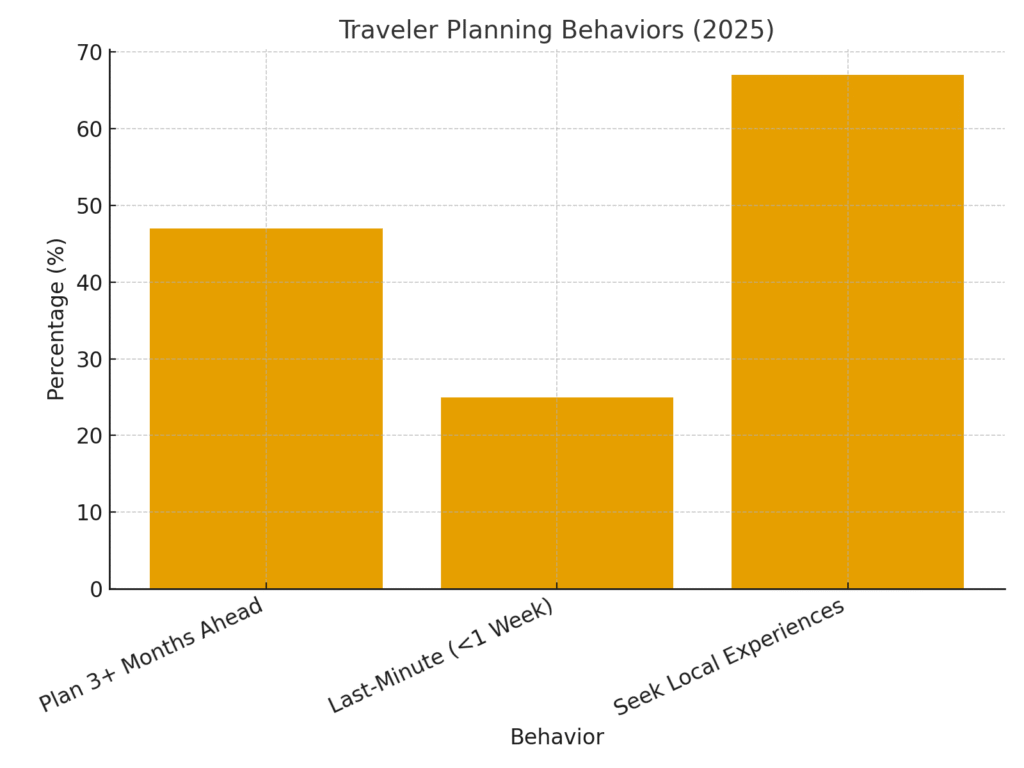
Nearly 47% of global travelers plan their vacations at least three months ahead of time. This extended planning window provides marketers with multiple opportunities to engage audiences. Early bird promotions, installment payment plans, and countdown campaigns all appeal to these planners. The trend also suggests that travelers are becoming more organized in managing budgets. Long-term marketing campaigns benefit most from this early planning habit.
Travel Planning Marketing Statistics #10: Video Marketing Effectiveness
About 68% of travelers report that video content heavily influences their decisions. From drone shots of beaches to hotel walkthroughs, videos create vivid emotional connections. Platforms like YouTube and TikTok play central roles in inspiring wanderlust. Travel brands investing in video marketing often see higher engagement rates. Videos essentially act as virtual previews of the experience being sold.
Travel Planning Marketing Statistics #11: Email Campaigns ROI
Travel email marketing continues to generate an impressive ROI of 3800%. Personalized newsletters with deals, tips, and destination guides keep travelers engaged. Email remains a cost-effective way to nurture long-term customer relationships. Automation tools now allow brands to send perfectly timed offers based on browsing behavior. Despite newer platforms, email still stands as one of the most powerful channels in travel marketing.
Travel Planning Marketing Statistics #12: Loyalty Programs
About 61% of travelers prefer to book with companies that offer loyalty rewards. Discounts, points, and exclusive perks encourage repeat business and long-term engagement. This statistic highlights how important customer retention is in the competitive travel sector. Loyalty programs not only drive revenue but also foster emotional connections with brands. In many cases, rewards are the deciding factor between one provider and another.
Travel Planning Marketing Statistics #13: Voice Search Usage
By 2025, 30% of travel searches are expected to come through voice assistants. This trend shows how travelers are shifting towards conversational search patterns. Voice-optimized SEO and natural language keywords are now critical for marketers. Travelers using devices like Alexa or Siri expect fast, accurate results. Brands that adapt to voice search are better positioned for future growth.
Travel Planning Marketing Statistics #14: Last-Minute Bookings
Around 25% of travelers make bookings within a week of departure. This last-minute market has grown thanks to flexible deals and mobile apps. Flash sales and dynamic pricing strategies work particularly well for this audience. The trend highlights the need for real-time, agile marketing campaigns. For many brands, catering to spontaneous travelers is an untapped opportunity.
Travel Planning Marketing Statistics #15: Cross-Device Journey
About 72% of travelers switch between devices before completing a booking. They may start browsing on mobile, compare options on desktop, and finalize on a tablet. This cross-device journey means consistency across platforms is crucial. Poor user experience on one device can break the entire booking process. Marketers must ensure seamless transitions for today’s multi-device travelers.
Travel Planning Marketing Statistics #16: Local Experiences Demand
Roughly 67% of tourists prioritize authentic local experiences over generic packages. Immersive activities such as cooking classes, cultural tours, and homestays are in demand. This trend highlights a shift away from mass-market tourism toward personalization. Marketing strategies now often emphasize storytelling about local culture. Travelers want more than sightseeing—they want experiences that feel unique.
Travel Planning Marketing Statistics #17: Online Travel Agencies (OTAs)
Over 50% of global bookings still flow through online travel agencies. Platforms like Booking.com, Expedia, and Trip.com remain dominant players. OTAs attract customers with convenience, bundled deals, and trust. This dominance means travel brands often need a dual strategy: working with OTAs while growing direct bookings. Ignoring OTAs means losing access to a massive audience.
Travel Planning Marketing Statistics #18: Influencer Partnerships
About 45% of travel brands have increased their influencer marketing budgets in 2025. Influencers bring destinations and experiences to life in relatable ways. Their storytelling resonates with audiences more authentically than traditional ads. Collaborations often generate both brand awareness and direct bookings. Travel influencers are now considered key partners in driving marketing success.
Travel Planning Marketing Statistics #19: Interactive Content
Approximately 55% of travelers prefer interactive tools during trip planning. Features like AR previews, budgeting quizzes, and itinerary builders enhance engagement. Interactive marketing not only entertains but also informs users better. This trend makes the planning process more enjoyable and hands-on. Brands adopting such strategies stand out in a crowded digital space.
Travel Planning Marketing Statistics #20: Average Booking Spend
In 2025, the average online booking spend per traveler has reached $2,300. This rise shows both higher travel demand and willingness to invest in experiences. Luxury accommodations and unique tours are driving much of this spending. Marketers can capitalize by targeting premium segments with tailored offers. The figure highlights how travel remains a priority in consumer budgets despite economic shifts.
Final Thoughts on Travel Planning Marketing
Looking over these statistics, I can’t help but think about my own travel planning habits and how much they’ve changed over the years. It’s clear that personalization, mobile convenience, and authentic local experiences are no longer extras—they’re expectations. That’s why I believe marketers who embrace these trends will truly connect with today’s travelers. Working alongside the leading marketing agency in New York, I’ve learned that staying ahead of these shifts can be the difference between being forgotten and becoming a traveler’s go-to choice. For me, these insights aren’t just numbers; they’re a reminder that marketing is ultimately about understanding people and the journeys they dream of taking.
SOURCES
https://www.travelperk.com/blog/online-travel-booking-statistics/
https://pro.regiondo.com/blog/all-the-tourism-and-travel-statistics-you-need-to-know-in-2025/
https://wearekomodo.com/blog/travel-marketing-trends-2025-winning-strategies-for-the-modern-traveler
https://www.cvent.com/en/blog/hospitality/travel-marketing-trends
https://www.emarketer.com/topics/industry/travel
https://explodingtopics.com/blog/travel-industry-trends
https://www.americanexpress.com/en-us/travel/discover/get-inspired/global-travel-trends
https://rezdy.com/blog/global-travel-tourism-statistics-2025/
https://champdigital.com/blog/25-travel-tourism-marketing-statistics/
https://www.amraandelma.com/travel-marketing-statistics/
https://www.sojern.com/blog/smarter-faster-always-on-the-u-s-destination-marketers-approach-to-2025
https://tomis.tech/blog/tourism-travel-industry-trends-2025/
https://navan.com/blog/online-travel-booking-statistics