




24 Sep TOP 20 VIRTUAL REALITY MARKETING STATISTICS 2025
As someone who has spent years exploring the intersection of technology and consumer engagement, I’m always fascinated by how quickly immersive experiences are shaping the future of brand interactions. That’s why I’m excited to share with you the latest virtual reality marketing statistics for 2025. These insights highlight how businesses are leveraging VR to connect with audiences in ways that feel personal, engaging, and unforgettable. Partnering with a leading marketing agency in New York has also given me a front-row seat to how innovative brands are pushing the boundaries of what’s possible. I want this blog to feel like a conversation between us, so let’s dive into the numbers together and see what they really mean for the future of marketing.
Top 20 Metaverse Marketing Statistics 2025 (Editor’s Choice)
| # | Statistic | Details |
|---|---|---|
| 1 | Global VR Market Value 2024 | USD 16.32 billion, projected to hit USD 123.06 billion by 2032. |
| 2 | VR Market Value in 2025 | Forecasted at USD 20.83 billion. |
| 3 | VR Market Growth by 2030 | Expected to reach USD 435.36 billion at 27.5% CAGR. |
| 4 | AR/VR Headset Shipments Q1 2025 | 18.1% year-over-year growth. |
| 5 | AR/VR Hardware Growth | 38.6% CAGR expected from 2025 to 2029. |
| 6 | Combined AR + VR Market | Valued at USD 32.1 billion annually, nearly doubling by 2028. |
| 7 | Global VR Users 2025 | Expected to reach 216 million users. |
| 8 | Global VR Users 2024 | 171 million users worldwide. |
| 9 | VR Ownership in the U.S. | 53 million adults own a VR system. |
| 10 | Teen VR Adoption | 26% of U.S. teens report owning a VR device. |
| 11 | VR Usage by Age Group | 16–24: 34%, 25–34: 35%, 35–44: 26%. |
| 12 | VR Device Shipments 2025 | Estimated at 43.5 million units worldwide. |
| 13 | Consumer Brand Preference | 53% prefer brands that use VR in marketing. |
| 14 | Enterprise VR Adoption | 30% of Forbes 2000 B2C companies expected to use VR. |
| 15 | VR Memory Recall | VR campaigns create ~33% higher memory recall. |
| 16 | Primary VR Usage | 72% of VR headset owners use them mainly for gaming. |
| 17 | VR Gaming Revenue | Projected to reach USD 3.2 billion by 2025. |
| 18 | Corporate VR Adoption | 91% of companies have adopted or plan to adopt VR/AR. |
| 19 | Meta’s VR Market Share | Meta held 50.8% of AR/VR headset share in Q1 2025. |
| 20 | XREAL’s VR Market Share | XREAL captured 12.1% of AR/VR headset share in Q1 2025. |
Top 20 Virtual Reality Marketing Statistics 2025
Virtual Reality Marketing Statistics #1: Global VR Market Value 2024
The global VR market reached USD 16.32 billion in 2024, showing how fast immersive technology is gaining traction. Projections suggest it will soar to USD 123.06 billion by 2032, proving this is not a short-term trend. This explosive growth reflects increasing adoption across industries, including marketing. For brands, VR presents new ways to connect with customers through immersive storytelling. The rising demand also means marketers should start integrating VR campaigns sooner rather than later.
Virtual Reality Marketing Statistics #2: VR Market Value in 2025
In 2025, the VR market is forecasted to reach USD 20.83 billion. This steady growth underlines consumer readiness for immersive experiences. Businesses that adopt VR early will gain an edge by positioning themselves as forward-thinking. Marketing campaigns that use VR can stand out by offering memorable, interactive experiences. This year marks a turning point where VR transitions from niche to mainstream marketing use.
Virtual Reality Marketing Statistics #3: VR Market Growth by 2030
By 2030, the VR market is expected to reach USD 435.36 billion. With a CAGR of 27.5%, this demonstrates how VR is becoming one of the fastest-growing tech sectors. Such growth points to expanded use in virtual commerce, advertising, and brand events. For marketers, this is a signal to prepare strategies that fully embrace immersive platforms. It is clear that VR will play a central role in shaping the customer journey of the future.
Virtual Reality Marketing Statistics #4: AR/VR Headset Shipments Q1 2025
In Q1 of 2025, AR/VR headset shipments grew 18.1% compared to the previous year. This uptick shows that adoption is steadily increasing across consumer groups. As more households own headsets, marketing opportunities in VR spaces expand. Brands can leverage this growth by creating campaigns that directly target VR users. The trend also indicates that immersive media is becoming part of daily life.
Virtual Reality Marketing Statistics #5: AR/VR Hardware Growth 2025–2029
Between 2025 and 2029, the AR/VR hardware market is expected to grow at a 38.6% CAGR. This fast pace signals demand for both new devices and improved user experiences. For marketers, this means access to better tools and wider audiences. Investment in VR advertising will likely grow alongside this hardware expansion. The market’s trajectory shows that VR is on its way to becoming a mainstream platform.
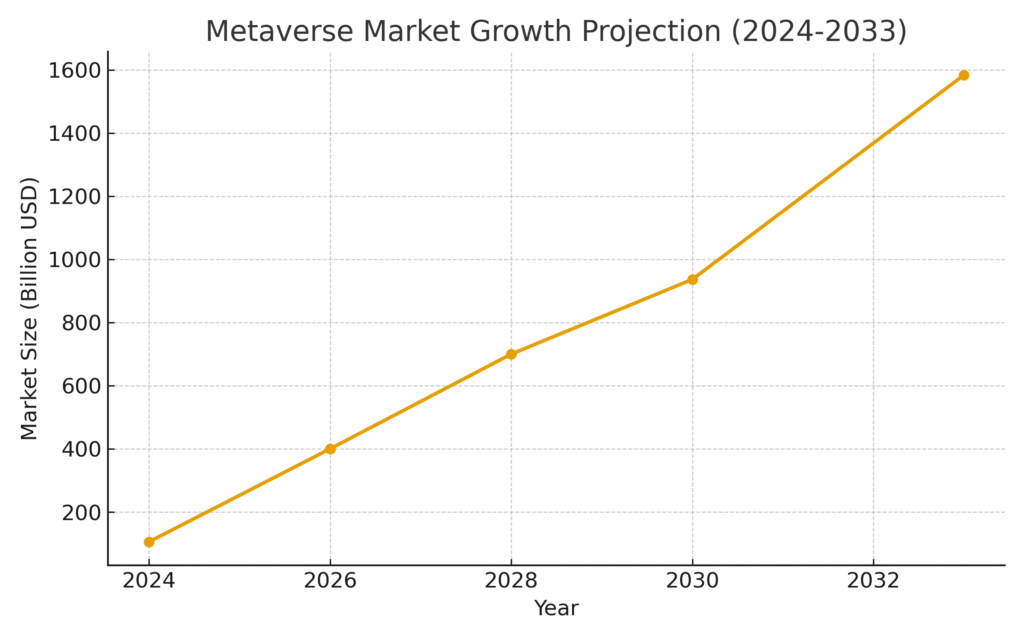
Metaverse Marketing Statistics #6: 25% of People Will Spend At Least 1 Hour Per Day in the Metaverse by 2026
Research predicts that by 2026, one in four people will spend at least an hour daily in the metaverse. This is a powerful indicator of mainstream adoption. For marketers, this provides a golden opportunity to connect with consumers in their preferred digital spaces. The increased time spent also suggests higher engagement potential. In short, the metaverse could become as common a daily activity as social media today.
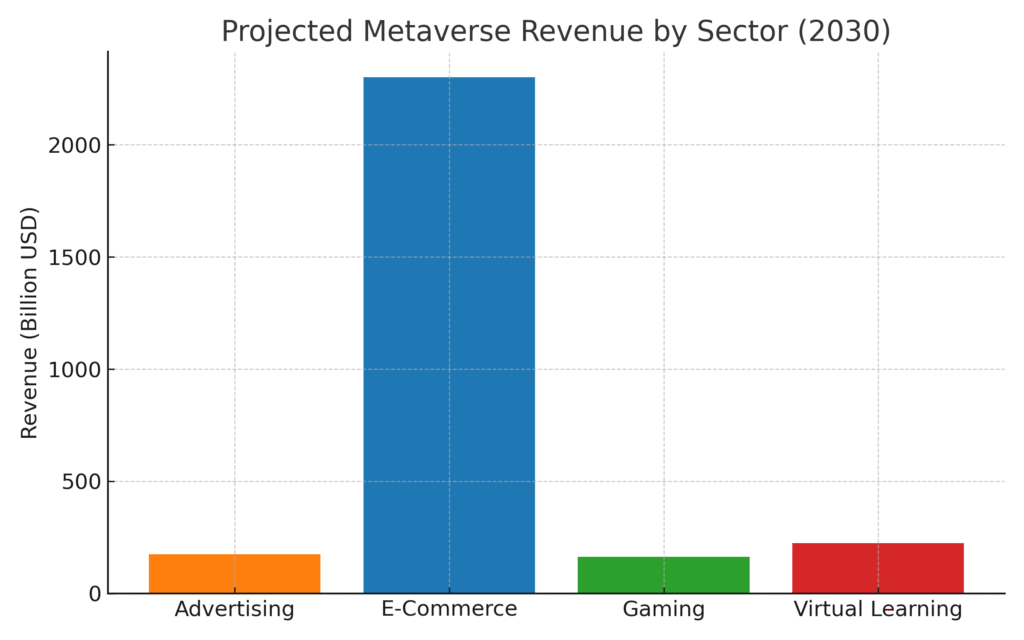
Metaverse Marketing Statistics #7: 52% Join for Work, 48% for Arts, 44% for Investment, 40% for Education
People are drawn to the metaverse for varied reasons beyond just entertainment. About 52% join for professional work, 48% for art and entertainment, 44% for financial investment, and 40% for education. These diverse motivations show that marketing campaigns can target multiple consumer segments. Brands can design experiences tailored to professional, creative, financial, or educational needs. This variety ensures the metaverse will remain a versatile platform for different industries.
Metaverse Marketing Statistics #8: 60% of Users Access the Metaverse via Mobile Devices in 2025
Mobile remains the gateway to digital life, and the metaverse is no exception. In 2025, around 60% of metaverse users access experiences through their phones. This highlights the critical role of mobile-first strategies for marketers. Campaigns must be designed for cross-platform compatibility and ease of use. By optimizing for mobile, brands can ensure accessibility and reach a larger portion of the user base.
Metaverse Marketing Statistics #9: Average Age of Users Is 28.7 Years in 2025
The average age of a metaverse user is currently 28.7 years. This puts the platform squarely in the hands of younger, digitally savvy audiences. Marketers aiming to connect with millennials and Gen Z will find the metaverse particularly effective. With such demographics leading adoption, trend-driven and interactive campaigns resonate best. The youthful user base also suggests long-term sustainability of the platform’s growth.
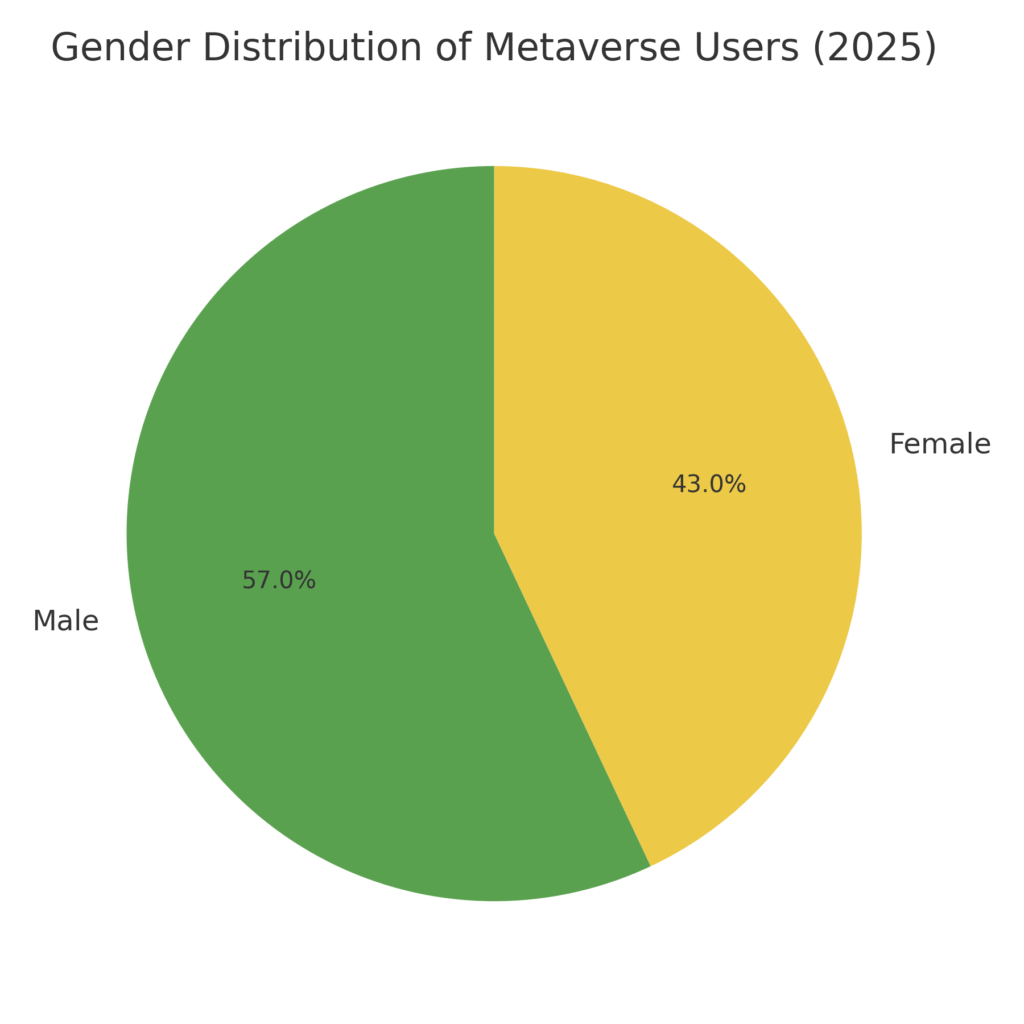
Metaverse Marketing Statistics #10: Female Users Represent 43% of Engagement in 2025
In 2025, women make up about 43% of metaverse engagement. This demonstrates a relatively balanced gender distribution compared to many early-stage tech spaces. For marketers, this means campaigns should be inclusive and gender-responsive. Female participation opens opportunities for lifestyle, retail, and beauty brands to innovate in immersive ways. Acknowledging diversity within the metaverse community can help brands foster loyalty and inclusivity.
Metaverse Marketing Statistics #11: 92% of Companies Say COVID-19 Accelerated Interest in Metaverse Tech
The COVID-19 pandemic accelerated digital transformation across industries, and the metaverse was no exception. About 92% of companies say the pandemic heightened their interest in exploring metaverse tools. This shift demonstrates how necessity drove innovation. For marketers, this suggests that virtual platforms are no longer seen as optional but critical. Businesses that adapted early are now better positioned to take advantage of emerging opportunities.
Metaverse Marketing Statistics #12: 52% of Brands Believe Customers Are Ready for the Metaverse
Over half of brands surveyed, or 52%, believe their customers are ready to engage with metaverse platforms. This indicates confidence in consumer adoption and enthusiasm. For marketers, this belief could inspire more experimentation and investment. Brands are starting to see metaverse campaigns as viable ways to build loyalty and engagement. Ultimately, consumer readiness helps justify the resources allocated to these digital ventures.
Metaverse Marketing Statistics #13: Only 26% of Brands Expect ROI in the Near Term
Despite excitement, only 26% of brands expect immediate ROI from metaverse initiatives. This reflects the experimental nature of marketing in emerging platforms. For marketers, it’s important to balance innovation with realistic expectations. Early adopters may not see financial returns right away, but they build valuable experience and brand presence. Patience and creativity will be key to turning metaverse investments into long-term success.
Metaverse Marketing Statistics #14: 74% of Internet Users Are Considering or Already Joining the Metaverse
About 74% of internet users have either already joined or are considering joining the metaverse. This shows strong consumer interest and curiosity. For marketers, this represents a large potential audience to capture. Early engagement strategies can help brands stand out before the space becomes oversaturated. The sheer level of interest suggests the metaverse could become a mainstream part of online life soon.
Metaverse Marketing Statistics #15: Advertising Could Generate $144–206 Billion by 2030
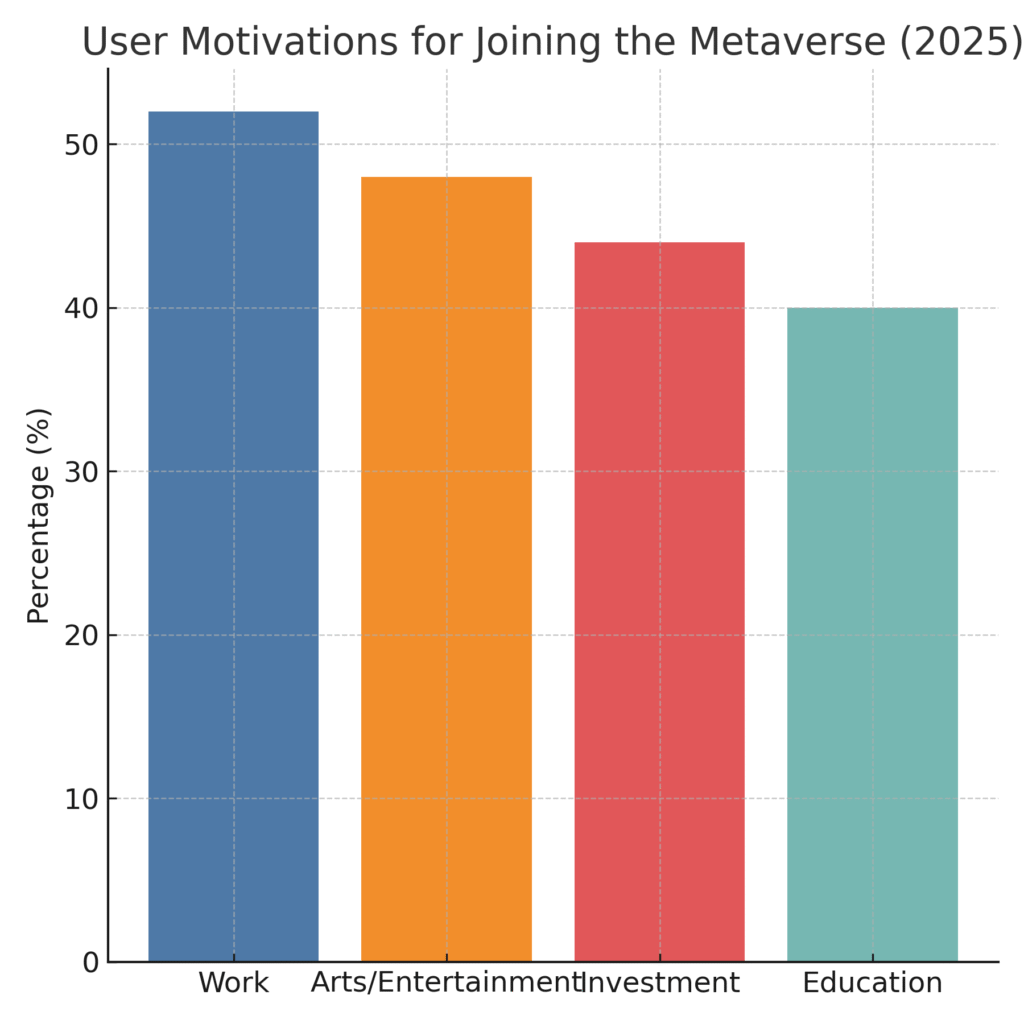
Advertising in the metaverse is projected to generate between $144 and $206 billion by 2030. This reflects the shift of ad budgets into immersive digital environments. Marketers have the chance to reinvent brand storytelling through interactive experiences. From virtual billboards to branded events, possibilities are vast. As ad revenues grow, metaverse marketing will become a core part of global campaigns.
Metaverse Marketing Statistics #16: E-Commerce Vertical Could Reach $2.0–2.6 Trillion by 2030
The e-commerce sector in the metaverse could capture between $2.0 and $2.6 trillion by 2030. This signals a revolution in how consumers shop online. Brands can create immersive storefronts and interactive product trials. For marketers, this means opportunities to bridge the gap between entertainment and shopping. Virtual commerce could soon become an essential part of digital retail strategies.
Metaverse Marketing Statistics #17: Virtual Learning Could Reach $180–270 Billion by 2030
Education is also set to benefit significantly from the metaverse. Forecasts suggest that virtual learning could grow to $180–270 billion by 2030. This opens doors for brands to partner with educational institutions and learning platforms. Marketing in this space could focus on tools, experiences, and content for learners of all ages. The result is both a social good and a major commercial opportunity.
Metaverse Marketing Statistics #18: Gaming and E-Commerce Lead Revenue Segments by 2030
By 2030, gaming and e-commerce are expected to dominate metaverse revenues. Gaming may reach $163 billion, while e-commerce could generate $201 billion. These figures highlight where marketers should direct their attention. Gaming campaigns can blend entertainment with branded experiences, while e-commerce strategies can focus on seamless shopping. Both verticals will shape the metaverse economy for years to come.
Metaverse Marketing Statistics #19: 77% Believe the Metaverse Could Cause Harm
Not all sentiment toward the metaverse is positive. Around 77% of respondents believe it could cause serious harm to society. Concerns include addiction, privacy violations, and mental health impacts. For marketers, this underscores the importance of ethical practices in digital campaigns. Transparency and responsibility will be vital to earning consumer trust in this space.
Metaverse Marketing Statistics #20: 47% Cite Addiction as the Top Risk, 41% Cite Privacy and Mental Health Issues
When asked about risks, 47% of respondents cited addiction as the primary concern. Another 41% highlighted privacy and mental health issues. This demonstrates the social responsibility marketers must uphold. Overlooking these concerns could damage brand credibility. Responsible marketing in the metaverse requires balancing innovation with care for user well-being.
The Human Side of the Metaverse
Looking at these metaverse marketing statistics, it’s clear that this space is more than just numbers on a page—it’s about people, communities, and the creative ways brands can meet them where they are. For me, the takeaway is that while the technology may feel overwhelming at times, the essence of good marketing doesn’t change: it’s about building trust, telling stories, and creating moments that matter. I believe that with guidance from a leading marketing agency in New York, businesses can navigate this shift thoughtfully and authentically. The metaverse is opening doors we couldn’t have imagined a decade ago, and it’s exciting to think about how marketers will use these new tools to connect on an even deeper level.
SOURCES
- https://scoop.market.us/metaverse-statistics/
- https://nogood.io/blog/marketing-in-the-age-of-the-metaverse/
- https://www.marketingeye.com/blog/why-metaverse-matters-for-marketing-strategy.html
- https://inbeat.agency/blog/meta-statistics
- https://www.mckinsey.com/capabilities/growth-marketing-and-sales/our-insights/mckinsey-on-the-metaverse
- https://www.demandsage.com/metaverse-statistics/
- https://mediaclans.com/metaverse-marketing-strategies/
- https://www.insightaceanalytic.com/report/metaverse-retail-market/3083
- https://www.metatechinsights.com/blogs/metaverse-marketing-how-brands-are-winning-in-virtual-worlds
- https://bloggingwizard.com/metaverse-statistics/
- https://mantu.com/blog/business-insights/metaverse-marketing-sales/
- https://www.omnifunnelmarketing.com/blog/the-future-of-marketing-in-the-metaverse-risks-rewards
- https://tonicdigital.asia/metaverse-in-2025/
- https://peertopeermarketing.co/metaverse-marketing/
- https://saletancy.com/blogs/metaverse-marketing-7-proven-marketing-strategies-2025/
- https://tomorrow-people.com/insights/metaverse-b2b-marketing/
- https://arxiv.org/abs/2308.10559